Busan Pushes for a Dedicated Maritime Court
Busan, South Korea — At a pivotal forum held at the National Assembly on November 6, 2024, stakeholders from various sectors gathered to discuss establishing a maritime court in Busan. The forum, titled "The Role and Legislative Direction of a Maritime Court for Busan as a Global Hub," attracted attention from prominent figures in politics, the maritime industry, and academia. The discussion focused on the court's potential to bring specialized legal expertise to Busan, supporting the city’s amb

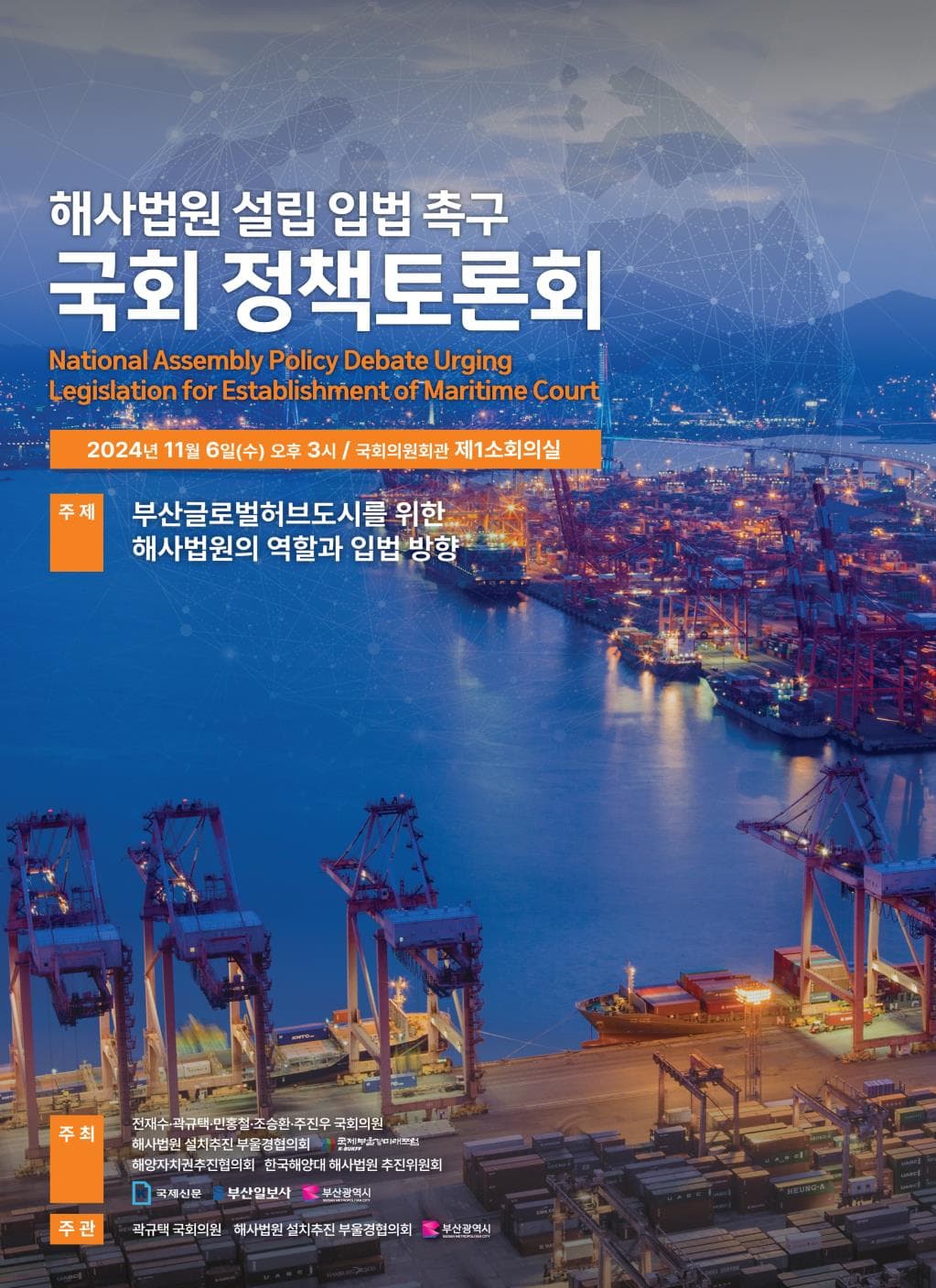
Busan, South Korea — At a pivotal forum held at the National Assembly on November 6, 2024, stakeholders from various sectors gathered to discuss establishing a maritime court in Busan. The forum, titled "The Role and Legislative Direction of a Maritime Court for Busan as a Global Hub," attracted attention from prominent figures in politics, the maritime industry, and academia. The discussion focused on the court's potential to bring specialized legal expertise to Busan, supporting the city’s ambitions to be a key player in the international maritime industry.
The forum drew over 50 participants, including bipartisan National Assembly representatives such as Jeon Jae-soo (Democratic Party) and Kwak Gyu-taek (People Power Party), alongside influential figures from the maritime and legal sectors. The event underscored the urgency of legal reforms to support South Korea’s bustling port economy, which handles 75% of the nation’s container traffic.
Busan ranks as the world’s sixth-largest container port, serving as a vital transshipment hub and processing approximately 75% of South Korea's container traffic. In addition to shipping, Busan is a growing center for maritime finance and research, housing institutions dedicated to the maritime industry. Stakeholders believe that a specialized maritime court would streamline the resolution of complex legal disputes, making the port more attractive to international businesses and investors.
“The establishment of a maritime court in Busan would give Korea a competitive edge in maritime law, similar to other leading shipping hubs like Singapore and Rotterdam,” said a spokesperson from Busan’s maritime industry. “This initiative would provide a trusted legal framework that supports industry needs and enhances our global standing.”
Key experts presented insights into the anticipated role and benefits of a maritime court. Among them, researchers and academics highlighted how such a court would address the unique challenges of maritime law, from international shipping contracts to disputes involving vessel management and logistics. The discussion emphasized the economic benefits of reducing legal delays and providing specialized legal services that attract more shipping companies to Busan.
Panel discussions featured perspectives from representatives of maritime associations, industry professionals, and legal scholars, who shared insights into how this court would boost South Korea’s competitiveness in maritime logistics and finance. Industry leaders noted that a specialized court could cut down on processing times for legal disputes and improve the overall efficiency of South Korea’s maritime sector.
Legislation supporting the maritime court proposal is currently under review in the National Assembly, with strong backing from lawmakers representing Busan and the surrounding regions. The proposed legislation seeks to establish the court as part of a broader legal infrastructure to support South Korea’s strategic goals in maritime industry growth. The bipartisan support for this legislation reflects a shared commitment to ensuring Busan remains a key player on the global stage.
For Busan, the establishment of a maritime court would reinforce its position as South Korea's maritime capital and enhance its attractiveness to international companies seeking reliable, specialized legal support in Asia. Additionally, this court would likely foster greater trust and engagement from foreign stakeholders, as local legal resources would be directly aligned with the complexities of maritime law.
“By supporting efficient dispute resolution, a maritime court could become a cornerstone of Busan’s future as a global hub for maritime industry and law,” a city official remarked, expressing optimism about the proposal’s long-term impact on the city’s economy.
The forum concluded with a call to action, with participants emphasizing the need for timely legislative approval. If the proposal passes, the maritime court could be operational within two years, signaling Busan’s readiness to lead in the maritime legal sector and solidifying South Korea’s competitiveness in global maritime commerce.
As the proposal moves through legislative channels, Busan’s maritime court initiative reflects South Korea’s ambitions to expand its legal infrastructure, supporting both local industry and international maritime players. If realized, the court could serve as a model for specialized judicial support, enhancing the city’s reputation as a preferred location for maritime dispute resolution in Asia.
Continue this reporting
Reporting on the same issue
Related coverage selected from the article's desk, topics and newsroom relationships.
 NewsOct 16, 2026
What Is Still Worth Going to See?
Busan’s biennale faces questions of artistic judgment and institutional care....
 NewsOct 14, 2026
What Became of Busan’s University Streets?
From 2015 to 2023, registered businesses grew near Pusan National University...
 NewsOct 12, 2026
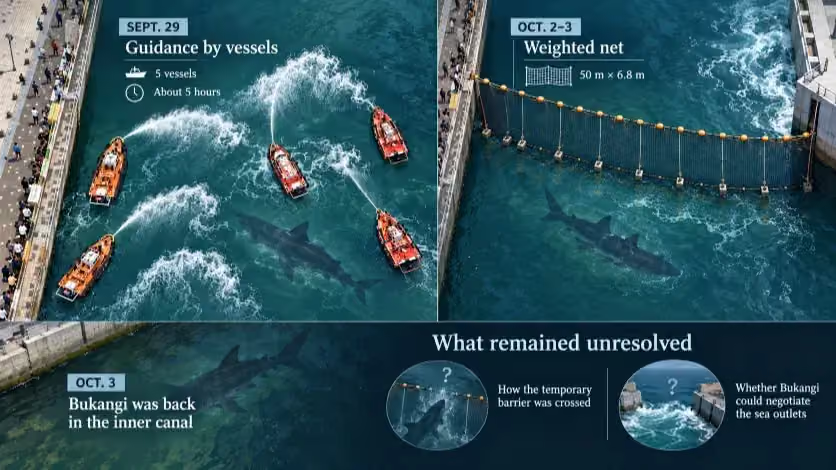
Bukangi, the Shark That Stayed in Busan’s North Port
A rescue net guided Bukangi toward the sea, but the dusky shark returned to B...
More from the author
More from this byline
Stay with the same line of reporting through more work from this byline.
 NewsOct 9, 2026
Why “Busan Is Good” Falls Short as a City Brand
 NewsSep 18, 2026
The Other AI Race Is for the Freedom to Change Course
Reader Signal
Community readWhat did this report leave you with?
Choose the signal that best reflects your reading. Select it again to remove it.
One response per article
No response selected
A moderated conversation about the reporting.
One-level replies and newsroom moderation keep the conversation anchored to this article.
Discussion Status
Open
Please sign in to join the discussion.
Newsletter
Weekly reporting and context from Busan and Korea.