Busan Metropolitan City to Replace Concrete Manhole Covers to Enhance Pedestrian Safety
Busan, South Korea –The recent decision by Busan Metropolitan City to transition from concrete to metal manhole covers by the first half of next year represents a major advancement in urban safety and infrastructure resilience. Prompted by safety concerns following a pedestrian accident in Jwacheon-dong, Dong-gu, this move aligns with the global shift towards more robust and sustainable urban infrastructure. Historically favored for their cost-effectiveness and aesthetic qualities, concrete man


Busan, South Korea –The recent decision by Busan Metropolitan City to transition from concrete to metal manhole covers by the first half of next year represents a major advancement in urban safety and infrastructure resilience. Prompted by safety concerns following a pedestrian accident in Jwacheon-dong, Dong-gu, this move aligns with the global shift towards more robust and sustainable urban infrastructure.
Historically favored for their cost-effectiveness and aesthetic qualities, concrete manhole covers have proven susceptible to cracking and breaking under high-traffic conditions, endangering pedestrian safety. The preference for metal, primarily cast iron, stems from its superior strength, durability, and ability to withstand diverse weather conditions and environmental stressors. This transition reflects a deeper understanding of the need for long-term safety and sustainability in urban development.
The upkeep of manhole covers is a vital component of urban infrastructure management. Traditional concrete covers necessitate frequent inspections and replacements due to wear and tear. Transitioning to sturdier materials such as metal or the increasingly popular plastic — celebrated for its lightweight nature and resistance to abrasion and chemicals — promises significant reductions in long-term maintenance costs and labor. However, these materials must be judiciously chosen, taking into account local requirements, load-bearing capacities, and environmental factors.
The issue with manhole covers, as highlighted by the incidents in Busan, is not unique. Cities globally are tackling the challenges posed by aging infrastructure, gravitating toward materials that ensure longevity, minimal maintenance, and enhanced safety. Innovations like prefabricated and modular manholes are gaining momentum due to their cost efficiency, quicker installation, and improved safety features.
In line with these developments, noteworthy advancements in manhole cover design and materials are emerging. For instance, in Massachusetts, energy provider Eversource is in the process of replacing approximately 40,000 manhole covers with safer, “energy-release” designs. These new covers lift slightly when under pressure but are then secured back into place by latches, significantly enhancing safety and mitigating accident risks.
Moreover, the field of manhole cover materials is continually evolving. Companies such as Fibrelite are offering rapid solutions for replacing outdated, underperforming manhole covers with their innovative watertight composite covers. The global market for manhole covers is on an upward trajectory, expected to reach approximately US$ 7.73 billion by 2029, growing at a CAGR of around 4.6%. This market is diversified, featuring types like metal caps, regenerated resin, and high strength steel fiber cement concrete.
Further innovations are unfolding in manhole cover design. IoT-based manhole cover management systems are in development, designed to alert authorities before problems arise. This proactive strategy is aimed at preventing accidents and preserving the integrity of urban infrastructure. Additionally, to deter theft — a common issue where covers are stolen for scrap — manufacturers are producing covers from composite materials with minimal resale value.
The initiative by Busan Metropolitan City to replace all concrete manhole covers with metal ones exemplifies a commendable step toward enhancing urban safety and infrastructure management. This move is in sync with global trends and innovations in manhole cover design and materials. As cities worldwide address the challenges of aging infrastructure, the focus is shifting towards materials that offer longer lifespans, reduced maintenance needs, and greater safety. The integration of technology, such as IoT-based management systems, is further paving the way for proactive and efficient infrastructure management. These collective efforts are pivotal in forging cities that are not only safer and smarter but also more sustainable.
Continue this reporting
Reporting on the same issue
Related coverage selected from the article's desk, topics and newsroom relationships.
 NewsOct 16, 2026
What Is Still Worth Going to See?
Busan’s biennale faces questions of artistic judgment and institutional care....
 NewsOct 14, 2026
What Became of Busan’s University Streets?
From 2015 to 2023, registered businesses grew near Pusan National University...
 NewsOct 12, 2026
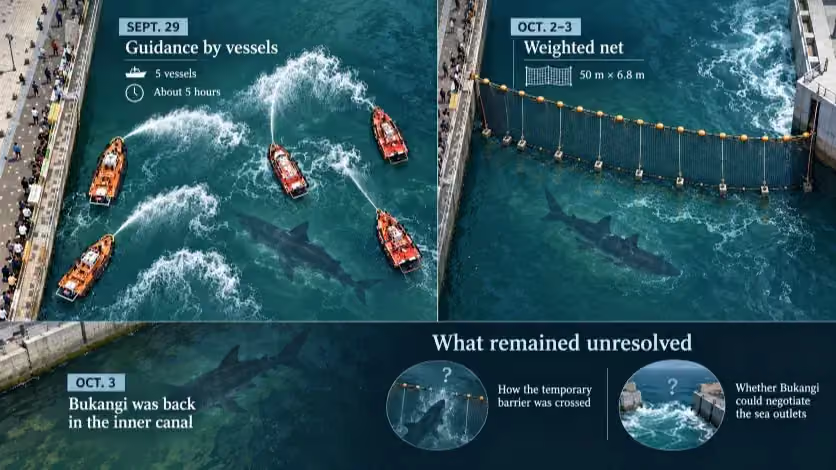
Bukangi, the Shark That Stayed in Busan’s North Port
A rescue net guided Bukangi toward the sea, but the dusky shark returned to B...
More from the author
More from this byline
Stay with the same line of reporting through more work from this byline.
 NewsOct 9, 2026
Why “Busan Is Good” Falls Short as a City Brand
 NewsSep 18, 2026
The Other AI Race Is for the Freedom to Change Course
Reader Signal
Community readWhat did this report leave you with?
Choose the signal that best reflects your reading. Select it again to remove it.
One response per article
No response selected
A moderated conversation about the reporting.
One-level replies and newsroom moderation keep the conversation anchored to this article.
Discussion Status
Open
Please sign in to join the discussion.
Newsletter
Weekly reporting and context from Busan and Korea.