Busan Introduces Pioneering Hydrogen-Powered Train Project
BUSAN — The city of Busan has unveiled plans to lead South Korea's foray into hydrogen train technology with the "Next Generation Busan Train Express (BuTX)" project, which will be significantly driven by private investments. Following the city's announcement of the initiative in March, a participation letter was submitted in June by the "BuTX Express Train Ltd." consortium, led by Hana Financial Group. This was bolstered on September 15th with the submission of a formal proposal for the projec

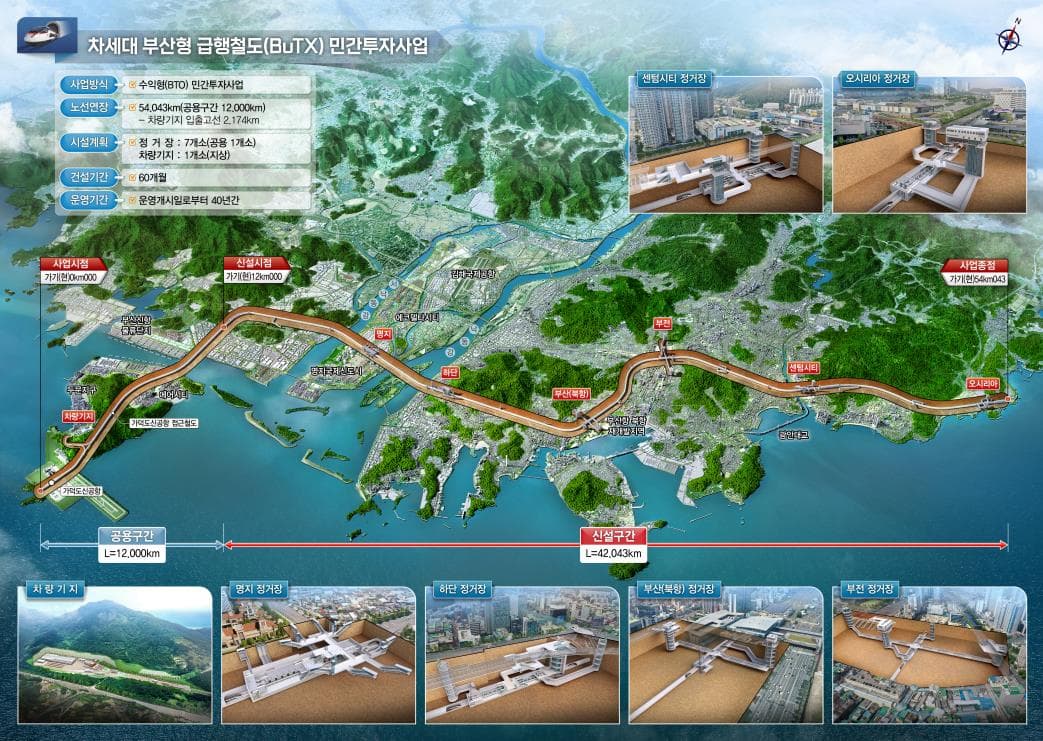
BUSAN — The city of Busan has unveiled plans to lead South Korea's foray into hydrogen train technology with the "Next Generation Busan Train Express (BuTX)" project, which will be significantly driven by private investments.
Following the city's announcement of the initiative in March, a participation letter was submitted in June by the "BuTX Express Train Ltd." consortium, led by Hana Financial Group. This was bolstered on September 15th with the submission of a formal proposal for the project, aiming for a 2030 launch.
The BuTX is set to be a rapid rail system deploying environmentally friendly hydrogen-powered vehicles that will traverse deep underground tunnels.
The proposed financial framework revolves around a BTO (Build Transfer Operate) model, estimated at KRW 4.7692 trillion (approximately USD 4 billion). With a projected operational duration of 40 years and a cost-benefit analysis indicating a B/C ratio of 1.14, the project's viability appears strong.
One notable alteration to the initial route planned by Busan city is the inclusion of the "Bujeon" station, anticipated to handle a significant number of transfers and traffic. The route will span over 54.043 km, with seven stations, starting from the new Gadeokdo Airport and running through destinations like Myeongji, Hadan, North Port (a proposed World Expo 2030 site), Bujeon, Centum City, and ending at Osiria. It's projected that the journey from Gadeokdo Airport to North Port will take just 18 minutes, and a total of 33 minutes to reach Osiria. With the addition of the Bujeon station, which will accommodate large influxes of commuters from Subway Lines 1 and 2, future connectivity to cities like Ulsan, Masan, and Changwon is expected. This could eventually bridge the regions of Busan, Ulsan, and Gyeongnam in under 30 minutes, potentially shaping a vast economic living area.
The city is preparing to commission a preliminary review of the received proposals by the Busan Research Institute, subsequently submitting them to the Korea Development Institute (KDI) for evaluation. There's an ambitious plan in place to finalize this review by 2024, break ground in 2025, and have the system operational by 2030, aligning with the Busan World Expo.
Busan's Mayor, Park Heong-Joon, expressed his enthusiasm for the groundbreaking project. "The BuTX, being the first in Korea to utilize hydrogen train technology, will not only be a leap towards our city's vision of becoming an advanced hydrogen-friendly city but will also spotlight South Korea's technological prowess on a global scale at the 2030 Busan World Expo," he stated.
He further emphasized, "The BuTX will act as a cornerstone, connecting the eastern and western regions of Busan swiftly, getting us one step closer to realizing a 15-minute living zone. We believe it will also play a pivotal role in elevating Busan to the status of a global hub city. We hope for the continued support and interest of our citizens in this transformative venture."
Continue this reporting
Reporting on the same issue
Related coverage selected from the article's desk, topics and newsroom relationships.
 NewsOct 16, 2026
What Is Still Worth Going to See?
Busan’s biennale faces questions of artistic judgment and institutional care....
 NewsOct 14, 2026
What Became of Busan’s University Streets?
From 2015 to 2023, registered businesses grew near Pusan National University...
 NewsOct 12, 2026
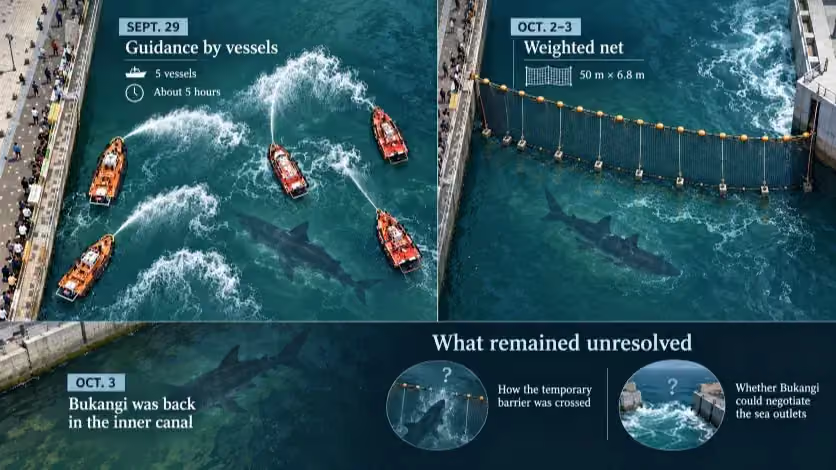
Bukangi, the Shark That Stayed in Busan’s North Port
A rescue net guided Bukangi toward the sea, but the dusky shark returned to B...
More from the author
More from this byline
Stay with the same line of reporting through more work from this byline.
 NewsOct 9, 2026
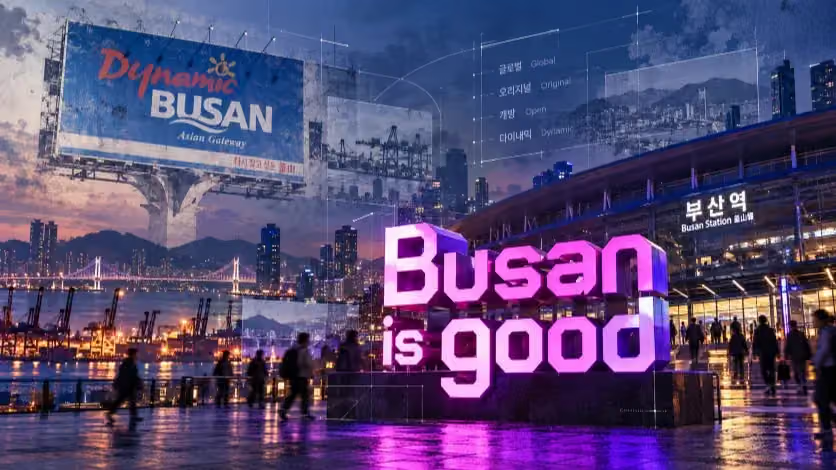
Why “Busan Is Good” Falls Short as a City Brand
 NewsSep 18, 2026
The Other AI Race Is for the Freedom to Change Course
Reader Signal
Community readWhat did this report leave you with?
Choose the signal that best reflects your reading. Select it again to remove it.
One response per article
No response selected
A moderated conversation about the reporting.
One-level replies and newsroom moderation keep the conversation anchored to this article.
Discussion Status
Open
Please sign in to join the discussion.
Newsletter
Weekly reporting and context from Busan and Korea.