Busan Introduces Barrier-Free Tax Payment Kiosks
Busan, South Korea - As part of its commitment to inclusive and accessible public services, the city of Busan has announced the rollout of barrier-free self-service tax payment kiosks, starting January 7, 2025. These state-of-the-art kiosks aim to enhance the convenience of tax payments for all citizens, including the elderly, individuals with disabilities, and others who face challenges accessing information. This initiative represents a significant upgrade in user-centered design and accessibi

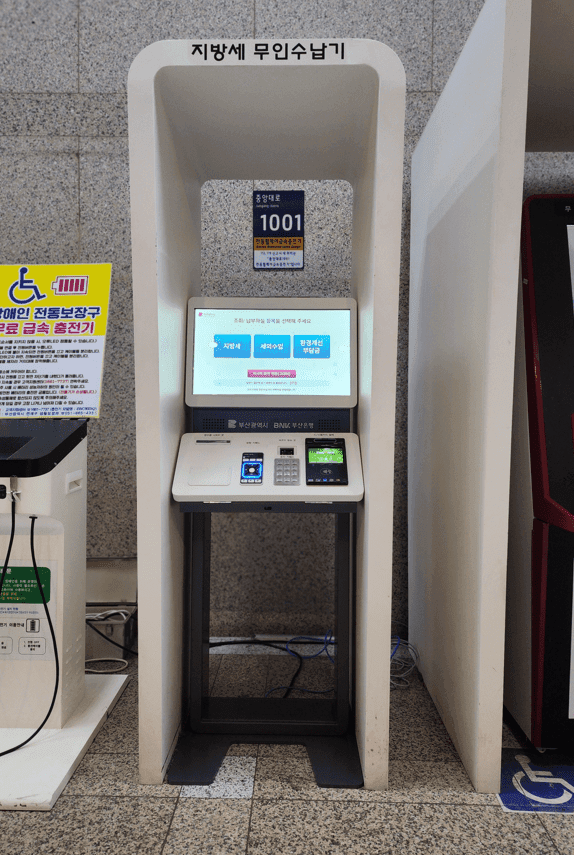
Busan, South Korea - As part of its commitment to inclusive and accessible public services, the city of Busan has announced the rollout of barrier-free self-service tax payment kiosks, starting January 7, 2025. These state-of-the-art kiosks aim to enhance the convenience of tax payments for all citizens, including the elderly, individuals with disabilities, and others who face challenges accessing information. This initiative represents a significant upgrade in user-centered design and accessibility within the city’s tax payment infrastructure.
The newly introduced kiosks replace outdated self-service machines across city and district offices. Designed in collaboration with the city’s treasury partner, Busan Bank, these kiosks provide a seamless experience for paying local taxes, non-tax revenue, and environmental improvement fees. What sets them apart is their barrier-free design, tailored to accommodate diverse user needs.
For wheelchair users, the kiosks feature lower operating panels and dedicated spaces to ensure ease of access. Individuals with visual impairments can benefit from high-contrast screens, Braille keypads, and audio guidance via earphone connectivity. For those with low vision, the system provides mobile-friendly digital receipts delivered via SMS or messaging platforms, offering both convenience and sustainability.
Beyond accessibility, these kiosks offer a range of benefits for all citizens. Payment methods include credit cards and mobile payment platforms, such as QR codes, ensuring flexibility and modern convenience. Importantly, the kiosks operate without imposing transaction fees, a stark contrast to traditional ATMs, which often charge up to ₩800 for interbank transactions. This no-cost approach removes financial barriers, providing real value to taxpayers.
The decision to implement barrier-free kiosks in Busan arose from a clear understanding of the limitations posed by traditional self-service machines, particularly for marginalized groups. The older systems often required users to stand or interact with screens and controls placed at inconvenient heights, making them difficult or impossible for wheelchair users or those with limited mobility to operate comfortably. Additionally, these machines lacked essential features for individuals with visual impairments, such as audio prompts or high-contrast displays, leaving many unable to use them effectively.
The newly designed kiosks have been carefully crafted to address these shortcomings and provide an inclusive experience for all users. For wheelchair users, the kiosks feature lowered operating panels and ample space to allow easy maneuverability. For individuals with low vision, the screens offer high-contrast, enlarged displays, ensuring that information is clearly visible. Those with visual impairments benefit from audio guidance, which delivers step-by-step instructions via earphone connectivity, along with Braille keypads to facilitate navigation.
In addition to these accessibility-focused features, the kiosks support the issuance of digital receipts, allowing users to receive proof of payment directly on their mobile devices through SMS or apps like KakaoTalk. This innovation not only eliminates the need for printed receipts but also adds a layer of convenience for all users.
In addition to tax payments, the kiosks will serve as an avenue for disseminating information. During non-peak hours, the machines will display promotional videos highlighting city policies and initiatives. This dual functionality enhances their utility while contributing to broader civic engagement and awareness.
City officials expect the kiosks to handle over 190,000 transactions annually, making them a key component of Busan’s push toward digital modernization and citizen-centric governance.
By incorporating feedback from citizens and addressing the specific needs of vulnerable groups, the city demonstrates a commitment to building an equitable urban environment.
However, questions remain about how well these systems will integrate into daily life. Will citizens fully embrace the new technology? And how will the city ensure ongoing maintenance and updates to keep the kiosks functional and relevant?
Busan’s barrier-free kiosks offer a glimpse into the future of public services—one where technology and design converge to create a truly inclusive society.
Continue this reporting
Reporting on the same issue
Related coverage selected from the article's desk, topics and newsroom relationships.
 NewsOct 16, 2026
What Is Still Worth Going to See?
Busan’s biennale faces questions of artistic judgment and institutional care....
 NewsOct 14, 2026
What Became of Busan’s University Streets?
From 2015 to 2023, registered businesses grew near Pusan National University...
 NewsOct 12, 2026
Bukangi, the Shark That Stayed in Busan’s North Port
A rescue net guided Bukangi toward the sea, but the dusky shark returned to B...
More from the author
More from this byline
Stay with the same line of reporting through more work from this byline.
 NewsOct 9, 2026
Why “Busan Is Good” Falls Short as a City Brand
 NewsSep 18, 2026
The Other AI Race Is for the Freedom to Change Course
Reader Signal
Community readWhat did this report leave you with?
Choose the signal that best reflects your reading. Select it again to remove it.
One response per article
No response selected
A moderated conversation about the reporting.
One-level replies and newsroom moderation keep the conversation anchored to this article.
Discussion Status
Open
Please sign in to join the discussion.
Newsletter
Weekly reporting and context from Busan and Korea.