Busan Implements Korea’s First Real-Time Groundwater Monitoring System
Busan has become the first city in South Korea to introduce a real-time monitoring system for groundwater levels and quality across 245 locations.

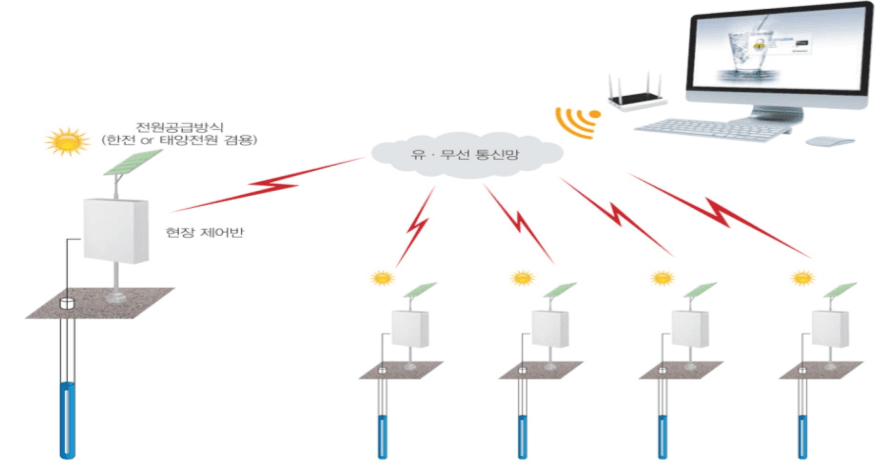
BUSAN, South Korea — The city of Busan has introduced South Korea’s first real-time groundwater monitoring system, aimed at improving data accuracy and resource management across its jurisdiction. The system integrates 245 auxiliary groundwater observation wells and enables continuous monitoring of water level, quality, and other key parameters.
The system is designed to assist in the early detection of groundwater contamination, sudden fluctuations in water table levels, and anomalies in hydrogeological conditions. It forms part of the city’s broader environmental management strategy and responds to growing concerns over the long-term sustainability of urban water resources.
The monitoring network employs sensors installed at each of the observation wells. These sensors transmit data via wireless or wired communication to a central server, where it is stored, analyzed, and visualized. Parameters monitored include water depth, temperature, electrical conductivity (EC), and concentrations of certain ions or compounds indicative of contamination.
According to technical specifications released by the city’s environmental policy division, the system is capable of generating hourly, daily, monthly, and annual data summaries. It also supports automated alerts in the event of abnormal readings and enables comparative analysis between different sites.
As of 2025, Busan manages a total of approximately 6,400 groundwater facilities, with an annual reported usage of around 37,647 metric tons. The new monitoring framework applies to a subset of these facilities—specifically those registered as auxiliary observation wells.
Groundwater in Busan is utilized for various purposes, including household consumption, agriculture, industrial processes, and hot spring operations. Certain districts, such as Dongnae-gu and Haeundae-gu, are known for their geothermal activity and have longstanding hot spring industries reliant on consistent subsurface water quality and quantity.
Some peripheral districts, including Gijang-gun and Gangseo-gu, also use groundwater for limited agricultural purposes, particularly in areas with reduced access to surface irrigation. In urban industrial zones such as Sasang-gu and Saha-gu, groundwater is occasionally used as supplementary process water, though concerns over legacy pollutants and salinity have been noted in prior environmental assessments.
Groundwater contamination—especially from nitrates, chlorides, and volatile organic compounds—has been a subject of monitoring in industrial areas. In several documented cases, water quality exceeded thresholds for domestic or recreational use, underscoring the need for continuous data collection and rapid-response infrastructure.
Under the South Korean Groundwater Act, the development and use of groundwater is subject to approval by local authorities. Extraction above certain volumes or pipe diameters requires formal permits, while smaller-scale uses may be subject to notification procedures. Unauthorized groundwater use can lead to penalties, including fines or imprisonment.
In addition, groundwater users may be liable for groundwater usage fees or environmental impact assessments depending on location, use type, and volume. Some exemptions are granted for agricultural or domestic wells, but regulated facilities—such as public hot springs—are subject to stricter oversight.
The real-time monitoring initiative aligns with national water governance frameworks and aims to enhance compliance through automation and transparency.
The Busan system includes not only monitoring functions but also database management and GIS (geographic information system) integration. Officials have indicated that the collected data may eventually be made available for research, public reporting, and integration with other city-level environmental systems, including climate adaptation and water supply planning.
Long-term policy applications could include groundwater recharge assessment, predictive modeling of aquifer stress, and early warning systems for over-extraction or industrial spill risk.
The city has not yet confirmed whether the system will be expanded to include private or industrial wells beyond the current public monitoring network. However, future developments may involve enhanced analytics, AI-based forecasting, and inter-agency data sharing.
Continue this reporting
Reporting on the same issue
Related coverage selected from the article's desk, topics and newsroom relationships.
 NewsSep 20, 2026
What It Takes for U.S. Navy Repair Work to Become a Busan Industry
HJ Shipbuilding has brought U.S. Navy maintenance work to Yeongdo. Whether it...
 NewsSep 17, 2026
Busan’s Finished Homes, Unfinished Projects
Busan’s unsold homes sit in one monthly total, but they belong to very differ...
 NewsSep 16, 2026
Busan’s Young-Adult Migration Turns Sharply at 25–29
Busan can still draw young adults into the city, but keeping them becomes far...
More from the author
More from this byline
Stay with the same line of reporting through more work from this byline.
 NewsSep 18, 2026
The Other AI Race Is for the Freedom to Change Course
 NewsSep 5, 2026
How a Political Appointment Becomes a Judgment of Character
Editorial Record
Corrections, sourcing notes and newsroom disclosures remain part of the published record. View Newsroom Notes →
Reader Signal
Community readWhat did this report leave you with?
Choose the signal that best reflects your reading. Select it again to remove it.
One response per article
No response selected
A moderated conversation about the reporting.
One-level replies and newsroom moderation keep the conversation anchored to this article.
Discussion Status
Open
Please sign in to join the discussion.
Newsletter
Weekly reporting and context from Busan and Korea.