Busan Hosts Third International Streaming Festival Amid OTT Industry Shift
Busan will host the third International Streaming Festival from August 22–25, uniting global OTT platforms, creators and investors to debate the future of digital media.

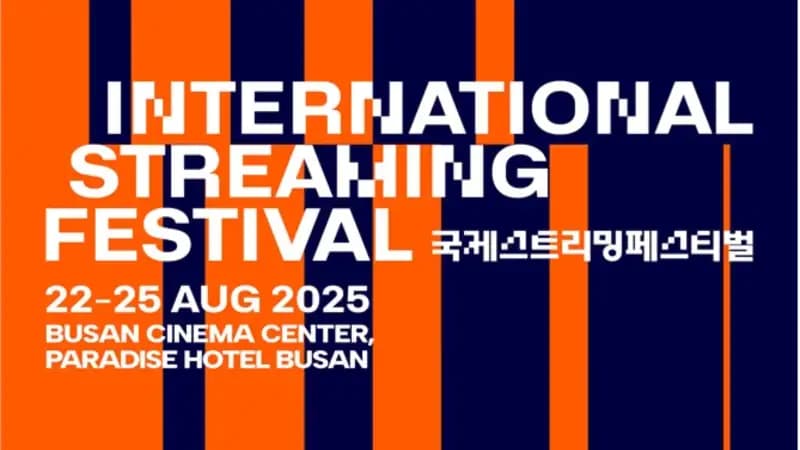
Busan, South Korea — Busan is preparing to place itself at the center of the global streaming conversation as it hosts the third International Streaming Festival from August 22 to 25. Organized by the city and Korea’s Ministry of Science and ICT, the four-day gathering is designed as both a marketplace for the industry and a cultural event for audiences, underscoring Busan’s ambition to become Asia’s hub for digital media innovation.
The timing could hardly be more significant. Streaming platforms now account for a larger share of television viewing than broadcast and cable combined, according to Nielsen’s most recent “Gauge” report. Advertising-based services, known as FAST channels, are also drawing surging audiences and marketing budgets, forcing the industry to rethink long-standing models of distribution and revenue.
Against this backdrop, Busan’s festival is positioning itself as a forum where global players can measure the state of the business and imagine what comes next.
Central to the event is the Global OTT Awards, scheduled for August 24 at the city’s landmark Cinema Center. With entries from more than a dozen countries and leading platforms, the awards are meant to capture the breadth of storytelling now being carried across borders by streaming technology.
Korean stars Park Eun-bin and Oh Jung-se are expected on the red carpet alongside Japan’s Kentaro Sakaguchi and China’s Bai Jingting, a lineup that highlights the festival’s role as a bridge among Asia’s largest markets.
Industry dialogue will unfold at the International Streaming Summit on opening day, where research groups such as Omdia and Statista will present fresh data and executives from TVING, Starzplay, Tubi, Samsung and LG will debate the trajectory of both subscription and advertising-driven platforms.
Topics on the agenda include the rapid spread of FAST channels, the integration of artificial intelligence into dubbing and personalization, and the challenges of monetization in increasingly fragmented markets.
The commercial side of the festival extends to an investment showcase where content creators and media-tech firms will present projects to international investors. Organizers describe it as a crucial attempt to connect Korean IP and technological innovation with the global financing ecosystem.
The program is not limited to boardrooms and panels. Screenings, interactive brand installations and an open-air concert of drama soundtracks are woven into the week, giving festival-goers a reminder that streaming is as much about audience experience as industry strategy.
The titles selected for this year’s showcase illustrate not only the variety of formats now carried on global platforms but also the shifting geography of streaming. Netflix brings a Seoul-set drama tracing the fractured bond of twin sisters, while China turns to adaptations of best-selling novels through Youku and iQIYI. Japan’s contribution, drawn from a meditative essay collection, suggests how established broadcasters are retooling their storytelling to remain relevant in the on-demand era.
From Kazakhstan comes a dark thriller about the organ trade, marking a rare Central Asian presence in the streaming spotlight. Each series will be paired with conversations with its creators, underscoring the festival’s attempt to function as both a business forum and a site of cultural exchange.
For Busan, the project is also a strategic bid to raise the standing of Korea’s OTT sector while building more formal links with global partners. Organizers argue that combining policy debate, investment pitches and audience-facing programs gives the gathering a character distinct from traditional film festivals.
Whether that approach will earn a permanent slot on the international media calendar remains uncertain, but the city is clearly wagering that the fusion of commerce and culture can strengthen its claim to be a regional streaming hub.
Continue this reporting
Reporting on the same issue
Related coverage selected from the article's desk, topics and newsroom relationships.
 NewsSep 20, 2026
What It Takes for U.S. Navy Repair Work to Become a Busan Industry
HJ Shipbuilding has brought U.S. Navy maintenance work to Yeongdo. Whether it...
 NewsSep 17, 2026
Busan’s Finished Homes, Unfinished Projects
Busan’s unsold homes sit in one monthly total, but they belong to very differ...
 NewsSep 16, 2026
Busan’s Young-Adult Migration Turns Sharply at 25–29
Busan can still draw young adults into the city, but keeping them becomes far...
More from the author
More from this byline
Stay with the same line of reporting through more work from this byline.
 NewsApr 23, 2026
Gaza photo exhibition opens at Busan’s Arise Art Space
 NewsNov 10, 2025
Busan Fireworks Festival Marks 20 Years With Expanded Show
Editorial Record
Corrections, sourcing notes and newsroom disclosures remain part of the published record. View Newsroom Notes →
Reader Signal
Community readWhat did this report leave you with?
Choose the signal that best reflects your reading. Select it again to remove it.
One response per article
No response selected
A moderated conversation about the reporting.
One-level replies and newsroom moderation keep the conversation anchored to this article.
Discussion Status
Open
Please sign in to join the discussion.
Newsletter
Weekly reporting and context from Busan and Korea.