Busan City’s Traditional Market Revitalization: 33 Sites Selected for Ministry of SMEs Contest
Busan City has recently announced a comprehensive initiative aimed at revitalizing its traditional markets and shopping districts. This move is part of a broader effort to breathe new life into these historical and cultural commercial zones, not just as economic centers but as living, breathing pieces of Busan's rich fabric. Central to this development is the careful selection of 33 distinct sites, each earmarked for a series of revitalization projects. These sites were chosen for their potenti


Busan City has recently announced a comprehensive initiative aimed at revitalizing its traditional markets and shopping districts. This move is part of a broader effort to breathe new life into these historical and cultural commercial zones, not just as economic centers but as living, breathing pieces of Busan's rich fabric.
Central to this development is the careful selection of 33 distinct sites, each earmarked for a series of revitalization projects. These sites were chosen for their potential to balance economic viability with cultural and historical significance.
The revitalization plan, a key component of the “2024 Traditional Market and Shopping District Revitalization Public Contest,” led by the Ministry of SMEs and Startups (MSS), aims to infuse these markets with a renewed sense of vitality. The initiative has secured a funding of 3 billion won, contributed by both national and local governments.
The Busan revitalization initiative has secured a funding of 3 billion won, with contributions from both national and local governments. The selection of projects involved a comprehensive evaluation process, including on-site assessments and proposal presentations by local governments. The final selection was made by a specialized committee, considering factors like feasibility, potential for enrichment, and alignment with community needs. This initiative, backed by substantial funding and a meticulous selection process, aims to rejuvenate the community and preserve the area’s rich cultural heritage.
The Busan revitalization initiative includes seven major projects aimed at enhancing traditional markets and shopping districts. These projects focus on specialized market development for cultural tourism and digital markets, maintenance of aging electrical wiring, installation of fire alarm systems, and market management support. The goal is to modernize these markets while preserving their cultural value, ensuring safety, improving management, and meeting contemporary consumer needs.
- Specialized Market Development: For cultural tourism, markets like Busan Free Wholesale Market, Bansong Market, and Hadan Fifth-day Market have been selected. Minrak Alley Market is chosen for the digital market project.
- Aging Electrical Wiring Maintenance: This targets the improvement of electrical infrastructure in the markets.
- Fire Alarm System Installation: Early fire detection systems will be installed in markets like Gupo Market, Bongnae Market, and Namhang Market.
- Market Management Package Support: This provides comprehensive support to the markets in terms of management and operations.
The revitalization plan for Busan’s traditional markets and shopping districts, set to begin in early 2024, includes the formation of project teams, execution of partnership agreements, and development of specific project plans. These steps aim to ensure smooth commencement and adherence to a collaborative approach. The project teams will oversee the implementation, while the partnership agreements will formalize roles and resources. The project plans, tailored to each market, will require approval from relevant authorities. This methodical approach aims to create a sustainable transformation of these districts.
Continue this reporting
Reporting on the same issue
Related coverage selected from the article's desk, topics and newsroom relationships.
 NewsOct 16, 2026
What Is Still Worth Going to See?
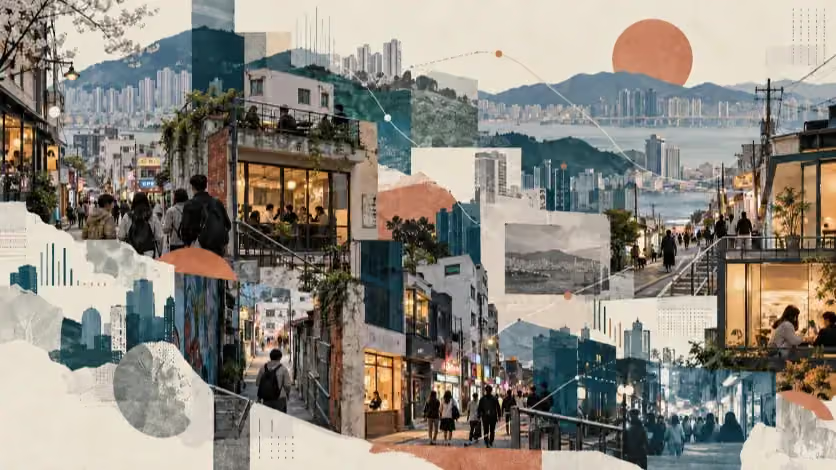
Busan’s biennale faces questions of artistic judgment and institutional care....
 NewsOct 14, 2026
What Became of Busan’s University Streets?
From 2015 to 2023, registered businesses grew near Pusan National University...
 NewsOct 12, 2026
Bukangi, the Shark That Stayed in Busan’s North Port
A rescue net guided Bukangi toward the sea, but the dusky shark returned to B...
More from the author
More from this byline
Stay with the same line of reporting through more work from this byline.
 NewsOct 9, 2026
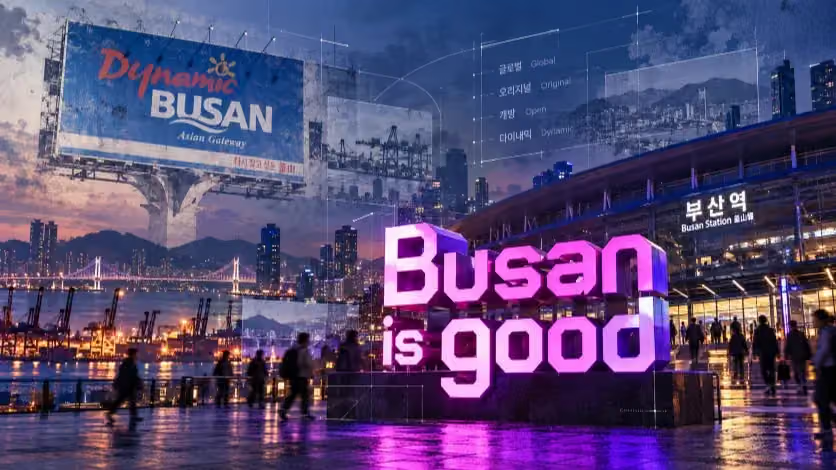
Why “Busan Is Good” Falls Short as a City Brand
 NewsSep 18, 2026
The Other AI Race Is for the Freedom to Change Course
Reader Signal
Community readWhat did this report leave you with?
Choose the signal that best reflects your reading. Select it again to remove it.
One response per article
No response selected
A moderated conversation about the reporting.
One-level replies and newsroom moderation keep the conversation anchored to this article.
Discussion Status
Open
Please sign in to join the discussion.
Newsletter
Weekly reporting and context from Busan and Korea.