Busan City Introduces Comprehensive Support Plan to Attract International Students
Busan, South Korea - To position itself as a global education hub, Busan Metropolitan City has unveiled a comprehensive support system aimed at enhancing the experience of international students. The initiative, set to roll out in 2025, seeks to attract and retain foreign talent by providing seamless support from the moment they arrive in the city until they transition into employment and long-term residency. The city government has set concrete targets to bring in 18,000 international student

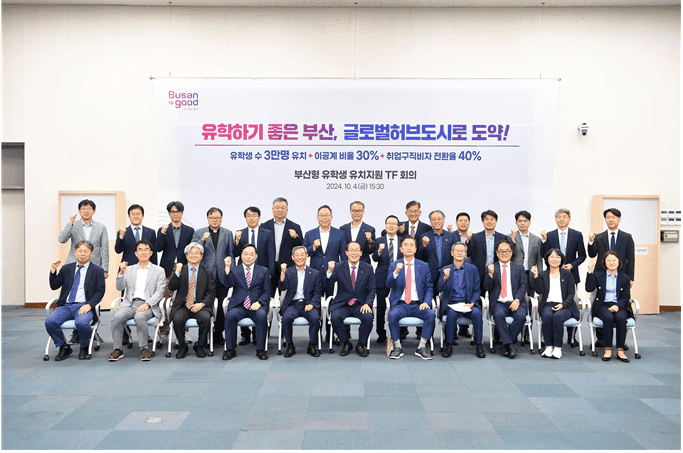
Busan, South Korea - To position itself as a global education hub, Busan Metropolitan City has unveiled a comprehensive support system aimed at enhancing the experience of international students. The initiative, set to roll out in 2025, seeks to attract and retain foreign talent by providing seamless support from the moment they arrive in the city until they transition into employment and long-term residency.
The city government has set concrete targets to bring in 18,000 international students by the end of the year. It also aims to increase the proportion of science and engineering students to 15% and raise the employment and job-seeking visa conversion rate to 27%. Through these efforts, Busan hopes to address critical gaps in its workforce while fostering a multicultural environment that aligns with its broader economic and social development goals.
The city's strategy is centered around a one-stop support system designed to guide international students through each stage of their academic and professional journey. From their initial recruitment to their education, employment, and eventual settlement in the region, the initiative aims to create an environment where students can thrive both academically and socially. Busan officials believe that by offering a structured and supportive ecosystem, the city can stand out as a top choice for students considering studying abroad in South Korea.
As part of its efforts to improve educational opportunities, Busan has designated the Busan Hangul Academy as a specialized language education center to provide comprehensive Korean language training. Operated under the Busan Global City Foundation, the academy will offer courses designed to enhance language proficiency and cultural understanding, helping students integrate more easily into society. Programs will include Korean language classes tailored to different skill levels, cultural immersion activities, and specialized workshops to prepare students for the Test of Proficiency in Korean (TOPIK). This initiative is expected to bridge language barriers and facilitate better communication between students and the local community.
Employment remains a key focus of the city’s efforts. Recognizing the challenges international students face in securing jobs after graduation, Busan is launching dedicated career support programs in collaboration with local industries. Internship opportunities, job fairs, and networking events will connect students with potential employers, while advisory services will assist with visa transitions and work permit applications. Through these initiatives, the city aims to address job market mismatches and enable foreign graduates to contribute meaningfully to the local economy.
Beyond academics and employment, Busan is also prioritizing cultural and social integration to ensure students feel welcomed and valued. A series of community engagement programs and cultural exchange events will provide opportunities for international students to interact with local residents and experience the city’s rich cultural heritage. The city plans to introduce initiatives such as the “Welcome Package” for new arrivals, featuring essential information on living in Busan, and an expanded mentorship program where senior students can guide newcomers through their transition.
In addition, Busan is set to host several promotional events aimed at attracting students from key overseas markets. Study abroad fairs are scheduled to take place in Japan, China, and Mongolia, offering prospective students a chance to learn more about the city’s educational opportunities firsthand. In July, the city will invite educational representatives from these countries to visit Busan and engage in networking sessions with local universities, further strengthening academic partnerships and exchange programs.
City officials are optimistic that these comprehensive measures will not only attract a diverse pool of talent but also contribute to Busan’s broader goal of becoming a globally competitive city. “Our objective is to create an environment where international students can build their futures here in Busan,” said Director of the Youth and Industry-Academia Cooperation Bureau at Busan City Hall. “By offering a well-structured support system and fostering closer collaboration with local universities and businesses, we aim to increase student retention rates and ultimately establish Busan as a leader in global education.”
However, the success of the initiative is not without challenges. Addressing housing shortages, ensuring adequate healthcare services for foreign students, and maintaining a balance between local and international interests are among the key hurdles the city must overcome. Authorities acknowledge that sustained efforts and continuous feedback from stakeholders will be crucial in refining the support system over time.
Looking ahead, Busan’s long-term ambition is to welcome 30,000 international students by 2028, with further enhancements to its support programs in the pipeline. Plans are underway to introduce tailored policies that address the evolving needs of international students, including expanded scholarship opportunities, enhanced accommodation facilities, and improved legal support services.
Continue this reporting
Reporting on the same issue
Related coverage selected from the article's desk, topics and newsroom relationships.
 NewsSep 28, 2026
Why Some Commercial Space in Busan Is Hard to Reuse
Two empty commercial spaces exposed to the same broader economy can have very...
 NewsSep 20, 2026
What It Takes for U.S. Navy Repair Work to Become a Busan Industry
HJ Shipbuilding has brought U.S. Navy maintenance work to Yeongdo. Whether it...
 NewsSep 17, 2026
Busan’s Finished Homes, Unfinished Projects
Busan’s unsold homes sit in one monthly total, but they belong to very differ...
More from the author
More from this byline
Stay with the same line of reporting through more work from this byline.
 NewsSep 18, 2026
The Other AI Race Is for the Freedom to Change Course
 NewsSep 5, 2026
How a Political Appointment Becomes a Judgment of Character
Editorial Record
Corrections, sourcing notes and newsroom disclosures remain part of the published record. View Newsroom Notes →
Reader Signal
Community readWhat did this report leave you with?
Choose the signal that best reflects your reading. Select it again to remove it.
One response per article
No response selected
A moderated conversation about the reporting.
One-level replies and newsroom moderation keep the conversation anchored to this article.
Discussion Status
Open
Please sign in to join the discussion.
Newsletter
Weekly reporting and context from Busan and Korea.