Busan City Discusses Progress on 'Glocal University' Initiative
BUSAN - On September 26th at 10:30 a.m., Busan City held a status report meeting for the 'Glocal University Initiative' at the 7th floor meeting room of the city hall. The conference, presided over by Lee Sung-Kwon, the Director of the Glocal University Support Team and Deputy Mayor for Economic Affairs of Busan City, saw the participation of over 20 representatives from Pusan National University (PNU), Busan National University of Education (BNUE), Busan Metropolitian City Office of Education,

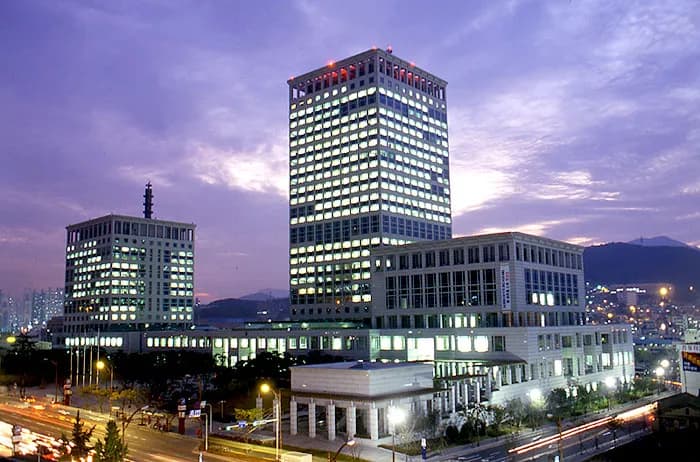
BUSAN - On September 26th at 10:30 a.m., Busan City held a status report meeting for the 'Glocal University Initiative' at the 7th floor meeting room of the city hall. The conference, presided over by Lee Sung-Kwon, the Director of the Glocal University Support Team and Deputy Mayor for Economic Affairs of Busan City, saw the participation of over 20 representatives from Pusan National University (PNU), Busan National University of Education (BNUE), Busan Metropolitian City Office of Education, Busan Techno Park, Busan Chamber of Commerce and Industry, Busan Employers Federation, and other relevant city departments.
The 'Glocal University 30 Project' is a policy initiative of the Yoon Suk-Yeol government's Ministry of Education. The term "Glocal" blends "GLOBAL," indicating globalization, and "LOCAL." The plan is to designate and support 30 Non-greater Seoul universities as 'Glocal Universities' by 2026, with ten universities being selected in both 2023 and 2024, and five in both 2025 and 2026. Each university selected is expected to receive approximately KRW 100 billion over five years from a total budget of KRW 3 trillion.
Evaluation Criteria for Glocal Universities:
- Preliminary Designation:(15 non-greater Seoul universities were provisionally designated in June)
- Innovation (60 points): Evaluates the university's vision for innovation, its long-term competitive potential, strategies to overcome challenges, and initiatives to collaborate across different sectors and faculties.
- Performance Management (20 points): Assesses the mechanisms put in place to swiftly execute the innovation plans.
- Regional Characteristics (20 points): Gauges the roles of universities, local authorities, and industries in local innovation, entrepreneurship, and collaborations.
Certain universities located in designated RISE regions, which stand for Regional Innovation System & Education, automatically receive 10 points for the regional characteristics criterion.
- Main Designation:(expected to be announced in November)
- Implementation Plan (70 points): Evaluates the alignment and appropriateness of the university's strategies with its vision.
- Support and Investment Plan from Local Governments (30 points): Assesses the local governments' financial plans and administrative support for the Glocal Universities.
RISE (Regional Innovation System & Education): This system seeks to promote co-growth between local regions and universities by granting local authorities the right to manage and fund university support.
The 'Glocal University 30 Project' is an endeavor by the Ministry of Education to foster globally competitive universities in non-capital regions. Following a public call for proposals in April, 15 universities, including Pusan National University (PNU) and Busan National University of Education (BNUE), were provisionally designated in June. A second-phase main designation evaluation is scheduled for November.
These provisionally selected universities must submit their final plans by the 6th of next month. Following a thorough evaluation process, the Ministry of Education will finalize its selection of ten universities this November. The plan is to select a total of 30 universities by 2026.
Continue this reporting
Reporting on the same issue
Related coverage selected from the article's desk, topics and newsroom relationships.
 NewsOct 16, 2026
What Is Still Worth Going to See?
Busan’s biennale faces questions of artistic judgment and institutional care....
 NewsOct 14, 2026
What Became of Busan’s University Streets?
From 2015 to 2023, registered businesses grew near Pusan National University...
 NewsOct 12, 2026
Bukangi, the Shark That Stayed in Busan’s North Port
A rescue net guided Bukangi toward the sea, but the dusky shark returned to B...
More from the author
More from this byline
Stay with the same line of reporting through more work from this byline.
 NewsOct 9, 2026
Why “Busan Is Good” Falls Short as a City Brand
 NewsSep 18, 2026
The Other AI Race Is for the Freedom to Change Course
Reader Signal
Community readWhat did this report leave you with?
Choose the signal that best reflects your reading. Select it again to remove it.
One response per article
No response selected
A moderated conversation about the reporting.
One-level replies and newsroom moderation keep the conversation anchored to this article.
Discussion Status
Open
Please sign in to join the discussion.
Newsletter
Weekly reporting and context from Busan and Korea.