Busan Briefs Public on Gadeokdo Airport City Development Project
Busan, South Korea — Busan City conducted a public briefing on August 14th at the Gadeokdo Administrative Welfare Center in Gangseo District, focusing on the "Gadeokdo Airport Complex City Development Project." This briefing was organized to address local residents’ questions and concerns, providing a detailed update on the project’s progress, especially following recent changes in the layout of the Gadeokdo New Airport. The Gadeokdo Airport Complex City Development Project is a major urban dev

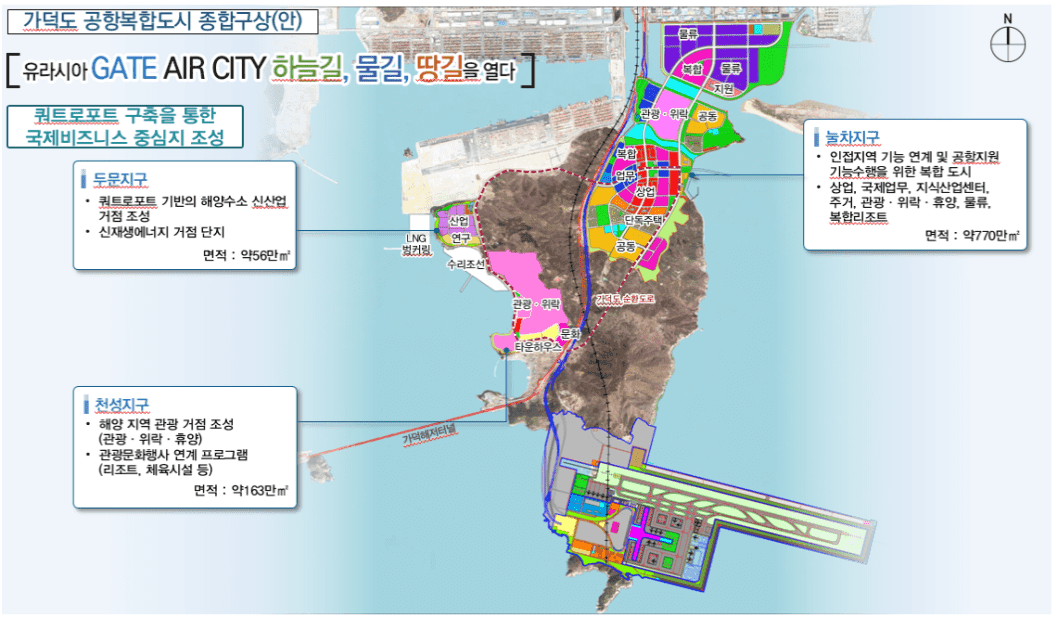
Busan, South Korea — Busan City conducted a public briefing on August 14th at the Gadeokdo Administrative Welfare Center in Gangseo District, focusing on the "Gadeokdo Airport Complex City Development Project." This briefing was organized to address local residents’ questions and concerns, providing a detailed update on the project’s progress, especially following recent changes in the layout of the Gadeokdo New Airport.
The Gadeokdo Airport Complex City Development Project is a major urban development initiative aimed at transforming the region into a key logistics and economic hub, closely tied to the operations of the upcoming Gadeokdo New Airport. Busan City has been advancing this project since the completion of its basic conceptual study in 2022. Currently, efforts are focused on securing the area’s designation as an economic free zone, with a feasibility study expected to be completed by July 2025.
During the briefing, officials presented significant revisions to the original land use plan. These changes were necessitated by the relocation of the Gadeokdo New Airport from its originally planned offshore location to Daehang-dong on Gadeokdo Island. The revised plan reflects a strategic response to these changes, optimizing the development areas for maximum efficiency and impact.
In the original plan, the project spanned approximately 9 million square meters across four zones: Nulcha, Dumun, Cheonseong, and Daehang. However, following the airport’s relocation, the development now focuses on three main zones—Nulcha, Dumun, and Cheonseong—covering around 9.89 million square meters.
Nulcha Zone is being expanded significantly to accommodate increased logistics facilities. This zone will be pivotal in supporting the new airport’s operations by serving as a central hub for logistics and cargo management, thereby bolstering Busan’s role as a major logistics center.
Cheonseong Zone is set to become a prime location for tourism and leisure activities, leveraging the natural scenic beauty of the area. The revised plan enhances this zone’s capacity for tourism-related infrastructure, which includes the development of resorts, recreational areas, and other facilities aimed at attracting both domestic and international tourists.
Dumun Zone will continue to focus on renewable energy development, aligning with Busan’s sustainability goals. This zone will host facilities dedicated to green energy production, including solar and wind power installations, ensuring that the city’s growth remains environmentally responsible and sustainable.
The Gadeokdo New Airport, a key component of this project, is scheduled to begin operations in December 2029, with an initial capacity to handle over 23 million passengers and 335,000 tons of cargo annually. Plans are already in place for a second runway, which will further increase the airport’s capacity by 2031. This development is crucial for Busan’s aspiration to become a global logistics and economic hub.
Busan City plans to submit the updated land use plan to the Ministry of Trade, Industry, and Energy by the end of this year, aiming to secure the area’s designation as an economic free zone. This designation is expected to attract significant domestic and international investment, positioning Busan as a key player in the global business landscape.
The Gadeokdo Airport Complex City Development Project is set to be a major driver of economic growth in South Korea’s southern region. As Busan City continues to develop this ambitious project, it will play a crucial role in transforming the city into a global hub for logistics, tourism, and sustainable energy, reinforcing Busan’s strategic importance on the international stage.
Continue this reporting
Reporting on the same issue
Related coverage selected from the article's desk, topics and newsroom relationships.
 NewsOct 16, 2026
What Is Still Worth Going to See?
Busan’s biennale faces questions of artistic judgment and institutional care....
 NewsOct 14, 2026
What Became of Busan’s University Streets?
From 2015 to 2023, registered businesses grew near Pusan National University...
 NewsOct 12, 2026
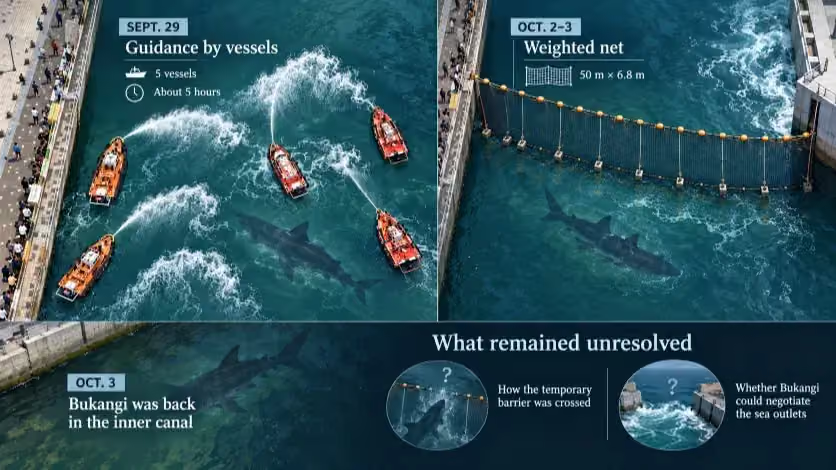
Bukangi, the Shark That Stayed in Busan’s North Port
A rescue net guided Bukangi toward the sea, but the dusky shark returned to B...
More from the author
More from this byline
Stay with the same line of reporting through more work from this byline.
 NewsOct 9, 2026
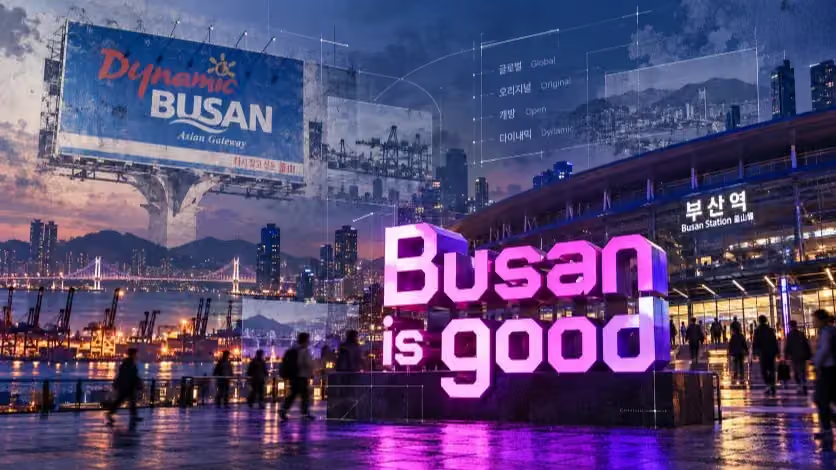
Why “Busan Is Good” Falls Short as a City Brand
 NewsSep 18, 2026
The Other AI Race Is for the Freedom to Change Course
Reader Signal
Community readWhat did this report leave you with?
Choose the signal that best reflects your reading. Select it again to remove it.
One response per article
No response selected
A moderated conversation about the reporting.
One-level replies and newsroom moderation keep the conversation anchored to this article.
Discussion Status
Open
Please sign in to join the discussion.
Newsletter
Weekly reporting and context from Busan and Korea.