Busan Bets on Bold Architecture to Redefine Urban Identity
Busan is making a calculated leap toward design innovation, relaxing height, setback, and landscaping restrictions in exchange for architectural creativity and civic utility.

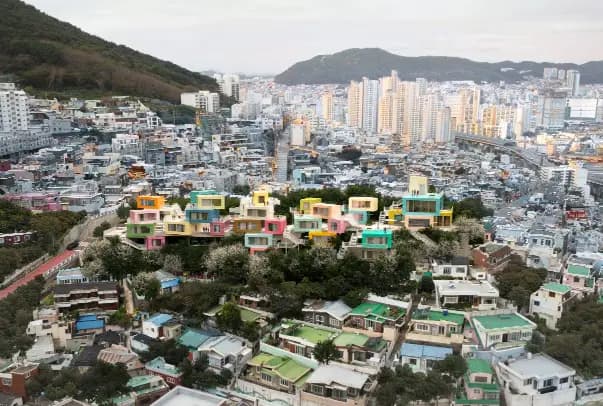
Busan, South Korea — In a bold move to reimagine its built environment, the city of Busan has launched the 2025 Special Architectural Zones Activation Project, an initiative that seeks to encourage globally competitive architectural design by easing long-standing urban development regulations. The project, now officially announced, allows architects and developers to propose transformative building concepts throughout the city. Selected proposals will benefit from regulatory flexibility, including loosened height restrictions, expanded floor area ratios, and streamlined permitting — all aimed at fostering a new era of urban innovation.
The initiative marks a shift in the way Busan approaches urban form. Traditionally constrained by prescriptive zoning and uniform building codes, South Korea’s second-largest city is now inviting architectural risk-taking, hoping to enhance both its skyline and global profile. Unlike conventional development mechanisms, the new framework offers what city planners call “extraordinary architectural freedom” for sites selected as special zones. Exemptions may be granted for building height, sunlight access, landscaping requirements, and density limits, provided that proposals demonstrate strong conceptual merit and public value.
A two-stage evaluation process will guide the implementation. The city’s Future Architecture Innovation Committee — comprised of experts in architecture, urban planning, and public policy — will first assess development proposals based on criteria including location potential, design intent, and anticipated civic benefit. From there, a limited international design competition will select the final architectural scheme. Participation will be limited to firms pre-approved through a separate shortlisting process, a format inspired by similar international design procurement models in Europe and North America.
Already, the city has designated two precedent-setting sites under this model: Nampo Harbor Town and Yeongdo Collective Hills, both of which reflect the kind of high-concept, mixed-use projects Busan hopes to attract. These developments, led in part by Dutch design firm MVRDV, showcase integrated residential and commercial programming with an emphasis on public space and visual identity.
City officials frame the project as a timely response to urban stagnation and aesthetic sameness. They argue that allowing greater design freedom will not only refresh the city’s image but also invigorate its construction sector, which has been under pressure from slowing demand and rising costs. Advocates also highlight the potential for international collaboration and cultural exchange through design, positioning Busan as a regional design capital in East Asia.
However, some urban policy experts have raised concerns that the initiative may prioritize architectural spectacle over inclusive city-building. Critics point out that the program currently lacks explicit requirements for affordable housing, public infrastructure, or environmental performance. While the regulatory incentives — such as a 1.2x bonus on floor area ratio — are generous, there is no binding mechanism to ensure that the public receives proportional benefit in return. In contrast, cities like Paris, Toronto, and Melbourne have embedded public-good provisions directly into their design flexibility schemes, linking aesthetic freedom with affordability, sustainability, and community access.
Equity of location is also under scrutiny. The first two designated zones are in prominent waterfront districts, but many of Busan’s aging or industrial neighborhoods — particularly in the city’s western corridor — have yet to see similar investment or planning attention. These areas, which face depopulation and declining infrastructure, arguably stand to benefit the most from innovative design and redevelopment. Without targeted incentives or zoning support, observers worry that the program could become spatially imbalanced, reinforcing existing patterns of growth and neglect.
Despite these criticisms, the city remains optimistic about the project’s potential to serve as a catalyst for change. Officials emphasize that the current phase is only the beginning and that additional rounds of design competitions and site designations are likely in the years ahead. The broader vision, they say, is to elevate architectural quality as a core component of Busan’s urban identity — not just in landmark districts but across the metropolitan landscape.
As global cities increasingly turn to design excellence as a strategy for livability and competitiveness, Busan’s experiment will be closely watched. The success of its special architectural zones will not be measured by visual drama alone but by how well they serve the people who live, work, and move through them. The challenge now is to ensure that creativity, inclusivity, and accountability are given equal weight in shaping the city of the future.
Continue this reporting
Reporting on the same issue
Related coverage selected from the article's desk, topics and newsroom relationships.
 NewsOct 16, 2026
What Is Still Worth Going to See?
Busan’s biennale faces questions of artistic judgment and institutional care....
 NewsOct 14, 2026
What Became of Busan’s University Streets?
From 2015 to 2023, registered businesses grew near Pusan National University...
 NewsOct 12, 2026
Bukangi, the Shark That Stayed in Busan’s North Port
A rescue net guided Bukangi toward the sea, but the dusky shark returned to B...
More from the author
More from this byline
Stay with the same line of reporting through more work from this byline.
 NewsOct 9, 2026
Why “Busan Is Good” Falls Short as a City Brand
 NewsSep 18, 2026
The Other AI Race Is for the Freedom to Change Course
Reader Signal
Community readWhat did this report leave you with?
Choose the signal that best reflects your reading. Select it again to remove it.
One response per article
No response selected
A moderated conversation about the reporting.
One-level replies and newsroom moderation keep the conversation anchored to this article.
Discussion Status
Open
Please sign in to join the discussion.
Newsletter
Weekly reporting and context from Busan and Korea.