Busan Begins Administrative AI Rollout Ahead of Legal Framework
Busan has announced the integration of AI into administrative operations, but no municipal framework exists to manage risks, ensure oversight, or involve citizens in the process.

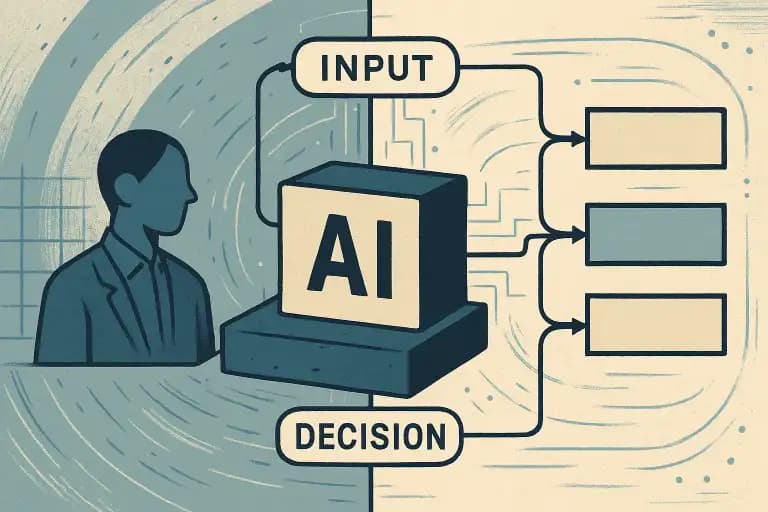
Busan, South Korea — Busan Metropolitan Government will commence an artificial intelligence training program for public officials on September 3, 2025. The program is titled “NEXT GOV AI” and will take place over three days at Naver Square in Haeundae. It is organized in cooperation with Naver Cloud Corporation. Thirty officials from city departments, district offices, and affiliated public institutions are scheduled to participate. The curriculum includes instruction on generative language models, retrieval-augmented generation techniques, and structured service planning.
The initiative is part of a phased deployment of AI across public administration functions. Pilot applications are underway in administrative document processing, public safety data handling, and environmental monitoring. The city has announced plans to expand these applications between 2026 and 2028. The training program is positioned as the operational starting point for this process.
The responsible unit is the Information Policy Division under the Digital Innovation Bureau. No dedicated AI oversight body has been established. The initiative was preceded by a memorandum of understanding signed between the city and Naver Cloud in April 2025. The agreement remains in effect until December 2027. Its terms include technical support, educational cooperation, and infrastructure access. Financial terms and cost allocation have not been disclosed.
There is no published AI strategy document from the city government. No municipal ordinance, administrative rule, or regulatory guideline has been introduced in connection with the project. There is no evidence of an internal compliance structure, audit mechanism, or review committee. Roles and responsibilities regarding algorithm validation, data quality assurance, and risk evaluation are not defined.
At the national level, the Artificial Intelligence Basic Act was passed in December 2024 and will come into force in January 2026. The law introduces classification requirements for high-impact AI systems and sets obligations for public institutions, including transparency disclosures, oversight procedures, and operational safeguards. Busan’s documentation makes no reference to these provisions. No transition plan or implementation roadmap aligned with the national legal framework has been released.
International standards relevant to public-sector AI governance are not cited. These include the European Union’s AI Act, the OECD AI Principles, the NIST AI Risk Management Framework, and the ISO/IEC 42001 standard for AI management systems. Busan has not announced adherence to any of these frameworks. Risk categorization, third-party evaluations, and system accountability procedures are not addressed in current materials.
The city has not provided public notice regarding the use of AI in service delivery. No mechanism is in place for citizen feedback, complaint submission, or algorithmic impact inquiry. There are no provisions for rights-based notification, data transparency, or model explainability. No terms governing AI procurement, open-source model integration, or platform interoperability have been disclosed.
Other jurisdictions have introduced structural elements for public AI accountability. New York City mandates independent audits for automated hiring systems. France requires administrative agencies to disclose algorithmic use in decision-making. The United Kingdom provides detailed implementation guidance for local AI deployment. These features are not currently present in Busan’s approach.
There is no indication of internal coordination between departments beyond the organizing division. No multidisciplinary working group, ethics council, or public advisory panel has been formed. Expert consultation and civil society engagement have not been documented. Busan has not issued any performance reports or system evaluation summaries.
Policy documents do not outline risk scenarios, mitigation plans, or incident response structures. Public-sector AI is treated as a service enhancement mechanism, without formal governance integration. No schedule for legal harmonization or policy revision has been published. Technical dependencies on a single private vendor have not been addressed. The long-term ownership of models and data remains undefined.
Further steps required include the designation of a responsible officer for AI oversight, development of a municipal AI governance framework, and alignment with national and international regulatory standards. Citizen-facing mechanisms should be introduced to ensure transparency and procedural accountability. Without these measures, administrative AI deployment in Busan will continue without institutional foundation, despite operational activity.
Continue this reporting
Reporting on the same issue
Related coverage selected from the article's desk, topics and newsroom relationships.
 NewsOct 16, 2026
What Is Still Worth Going to See?
Busan’s biennale faces questions of artistic judgment and institutional care....
 NewsOct 14, 2026
What Became of Busan’s University Streets?
From 2015 to 2023, registered businesses grew near Pusan National University...
 NewsOct 12, 2026
Bukangi, the Shark That Stayed in Busan’s North Port
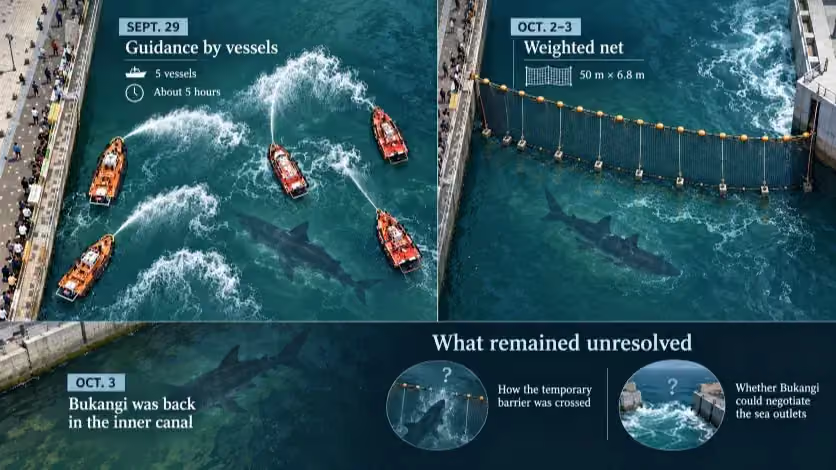
A rescue net guided Bukangi toward the sea, but the dusky shark returned to B...
More from the author
More from this byline
Stay with the same line of reporting through more work from this byline.
- NewsOct 14, 2026
What Became of Busan’s University Streets?
 NewsSep 28, 2026
Why Some Commercial Space in Busan Is Hard to Reuse
Reader Signal
Community readWhat did this report leave you with?
Choose the signal that best reflects your reading. Select it again to remove it.
One response per article
No response selected
A moderated conversation about the reporting.
One-level replies and newsroom moderation keep the conversation anchored to this article.
Discussion Status
Open
Please sign in to join the discussion.
Newsletter
Weekly reporting and context from Busan and Korea.