Busan Approves 2025 Plan to Support Growing Foreign Resident Population
The city of Busan has finalized a new policy framework to support foreign residents, outlining 52 programs across settlement services, education, and community integration.

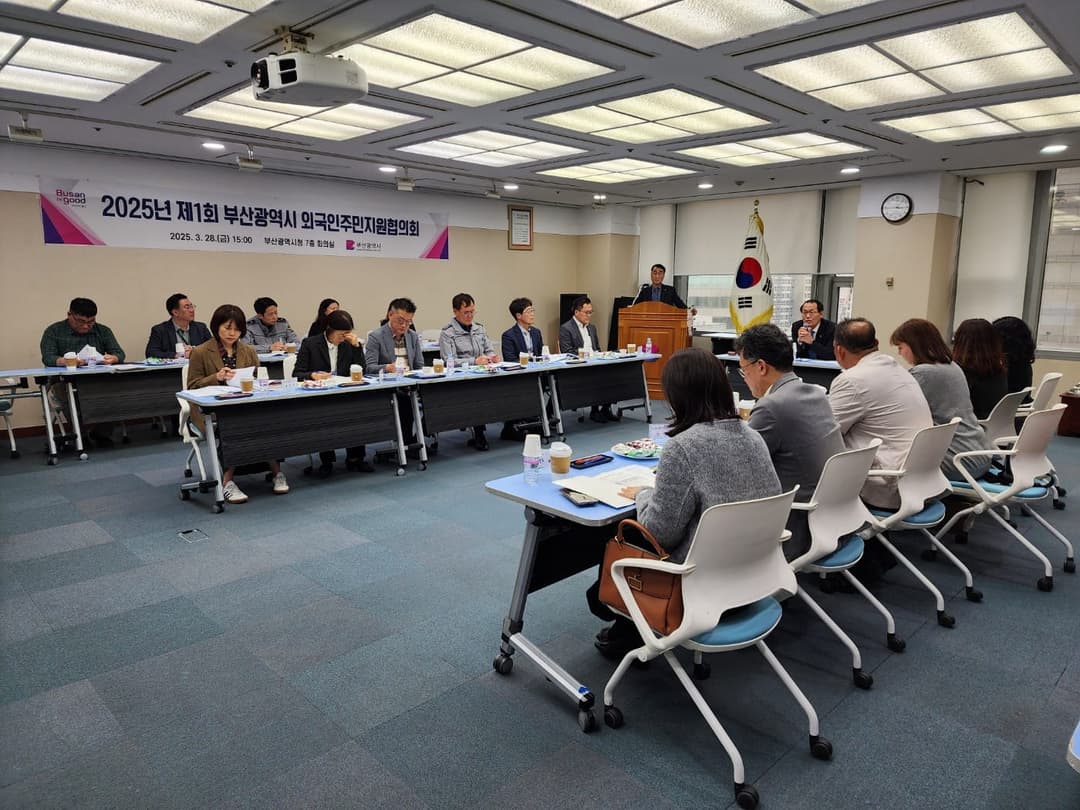
Busan, South Korea — The city of Busan has approved its 2025 policy framework aimed at supporting foreign residents, amid a steady increase in the city’s non-Korean population. The plan was discussed and finalized during a meeting of the Busan Foreign Resident Support Council on March 28 at City Hall, attended by municipal officials, public agencies, policy experts, and foreign resident representatives from various countries including the Philippines, Russia, Indonesia, Uzbekistan, and Nepal.
According to city officials, the initiative is intended to provide structured support for foreign residents living in Busan, with a focus on promoting stable settlement and integration into the local community. As of 2023, the number of foreign residents in Busan reached 83,401, accounting for approximately 2.5 percent of the city’s population. This figure has shown consistent growth over the past decade, while the city’s overall population has declined.
The 2025 plan outlines four strategic goals, fourteen key policy tasks, and a total of fifty-two related projects. These are allocated a combined budget of approximately 6.9 billion KRW. The plan includes programs targeting visa-related support, international student attraction strategies, multilingual service access, onboarding education, childcare, employment assistance, and housing support. Additional measures include initiatives to promote cultural understanding, citizen engagement, and social cohesion.
The city stated that the plan aligns with existing legal frameworks, such as the Framework Act on the Treatment of Foreigners in Korea and Busan’s municipal ordinance on foreign resident support. Specific programs include the creation of a multilingual call center, customized education programs, and expanded outreach to support foreign children and families.
Busan officials also indicated that the city would implement a new integrated service network and conduct regular surveys on the status of foreign residents to support data-driven policymaking. The administration emphasized the need for a transition from short-term attraction strategies to longer-term settlement and community-building efforts.
Vice Mayor for Administrative Affairs Lee Jun-seung, who chaired the meeting, noted that foreign residents contribute to the city’s demographic and economic landscape, and that a more inclusive policy approach is needed to address emerging challenges. “We will continue to collect feedback from various sectors to help build a more foreigner-friendly environment in Busan,” he said during the session.
Program rollout is expected to begin in the second quarter of 2025, with evaluation mechanisms to be introduced by the end of the year.
Continue this reporting
Reporting on the same issue
Related coverage selected from the article's desk, topics and newsroom relationships.
 NewsOct 16, 2026
What Is Still Worth Going to See?
Busan’s biennale faces questions of artistic judgment and institutional care....
 NewsOct 14, 2026
What Became of Busan’s University Streets?
From 2015 to 2023, registered businesses grew near Pusan National University...
 NewsOct 12, 2026
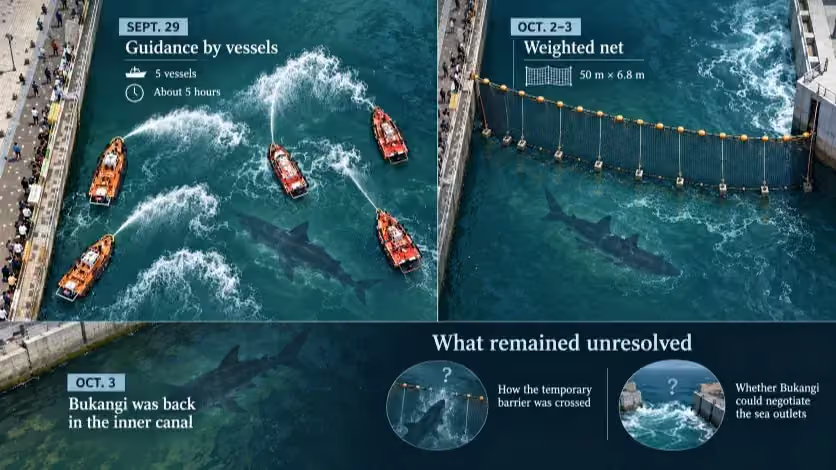
Bukangi, the Shark That Stayed in Busan’s North Port
A rescue net guided Bukangi toward the sea, but the dusky shark returned to B...
More from the author
More from this byline
Stay with the same line of reporting through more work from this byline.
 NewsOct 9, 2026
Why “Busan Is Good” Falls Short as a City Brand
 NewsSep 18, 2026
The Other AI Race Is for the Freedom to Change Course
Reader Signal
Community readWhat did this report leave you with?
Choose the signal that best reflects your reading. Select it again to remove it.
One response per article
No response selected
A moderated conversation about the reporting.
One-level replies and newsroom moderation keep the conversation anchored to this article.
Discussion Status
Open
Please sign in to join the discussion.
Newsletter
Weekly reporting and context from Busan and Korea.