Busan and Pompidou Center Forge MOU Amid Controversy
Busan, South Kroea - Busan has officially secured a cultural partnership with the renowned Centre Pompidou in Paris, signing a Memorandum of Understanding (MOU) to establish a branch of the world-famous art museum in the city. The agreement, formalized in a virtual ceremony between Busan Mayor Park Heong-joon and Pompidou Center President Laurent Le Bon, marks a pivotal step in the city’s goal to position itself as a key player in the global arts scene. However, the project faces growing opposit

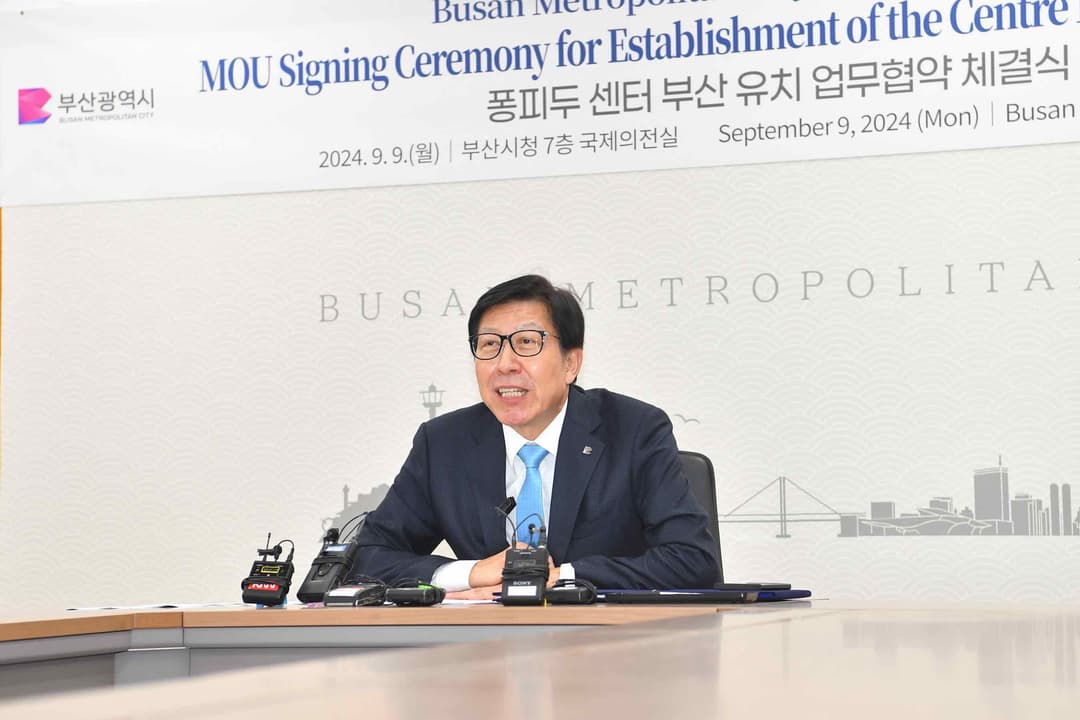
Busan, South Kroea - Busan has officially secured a cultural partnership with the renowned Centre Pompidou in Paris, signing a Memorandum of Understanding (MOU) to establish a branch of the world-famous art museum in the city. The agreement, formalized in a virtual ceremony between Busan Mayor Park Heong-joon and Pompidou Center President Laurent Le Bon, marks a pivotal step in the city’s goal to position itself as a key player in the global arts scene. However, the project faces growing opposition, with concerns over its financial sustainability and transparency.
The new branch, tentatively named "Pompidou Center Busan," will be located within the Igidae Art Park and will cover 15,000 square meters. It will include exhibition spaces, creative studios, and performance venues, aiming to integrate local and global art scenes. The center is expected to feature major international exhibitions and offer dedicated spaces for local artists to develop their work.
The partnership between Busan and the Pompidou Center is seen as a cultural turning point for the city. Busan is already known for its vibrant film and music festivals, but the addition of a global modern art institution is expected to elevate its international profile even further. Mayor Park hailed the agreement as a “defining moment” that will help transform Busan into a global cultural hub. The center will host annual exhibitions and educational programs aimed at both local residents and international visitors, positioning Busan as a major destination for contemporary art.
In addition to cultural benefits, the project is expected to have a positive economic impact. The city estimates that the Pompidou Center Busan will attract hundreds of thousands of visitors annually, boosting the local tourism industry and contributing to the city's overall economy. Local officials emphasize that the project is a long-term investment in Busan’s future as a cultural capital.
Growing Opposition and Financial Concerns
Despite the excitement surrounding the project, there is growing opposition from local politicians, civic groups, and citizens. Critics argue that the project’s costs—1,000 billion KRW for construction and over 100 billion KRW annually for operations—are excessive and could put a strain on the city’s finances. The projected revenue from ticket sales and other activities is expected to cover only a fraction of the operational costs, leading to an anticipated annual deficit of over 75 billion KRW.
Opponents also argue that these funds could be better spent on enhancing existing local institutions, such as the Busan Museum of Art and Museum of Contemporary Art Busan, which they believe could achieve global recognition with adequate investment. Some critics have labeled the project as an example of “cultural imperialism,” where foreign cultural brands are prioritized over the development of local art and heritage.
Beyond financial concerns, critics have also raised issues about the transparency of the decision-making process. They claim that the project has been pushed forward without sufficient public discussion or input, and some have accused the city of engaging in “closed-door politics” to advance the project. Civic groups have organized protests and called for a re-evaluation of the project, urging the city to focus on more sustainable investments that support the local arts community.
The project is slated to break ground in 2027, with a target opening date in 2031. Despite the opposition, city officials remain confident in the project’s potential to elevate Busan’s status as a cultural and economic powerhouse. Mayor Park emphasized that the center will be a key element in Busan’s broader cultural strategy, alongside other major projects like the Busan Opera House and Busan Concert Hall, as part of the city’s vision to become a “global cultural hub.”
However, with public opposition growing, the success of the project will likely depend on the city’s ability to address concerns about its financial sustainability and ensure greater transparency in its execution.
Continue this reporting
Reporting on the same issue
Related coverage selected from the article's desk, topics and newsroom relationships.
 NewsOct 16, 2026
What Is Still Worth Going to See?
Busan’s biennale faces questions of artistic judgment and institutional care....
 NewsOct 14, 2026
What Became of Busan’s University Streets?
From 2015 to 2023, registered businesses grew near Pusan National University...
 NewsOct 12, 2026
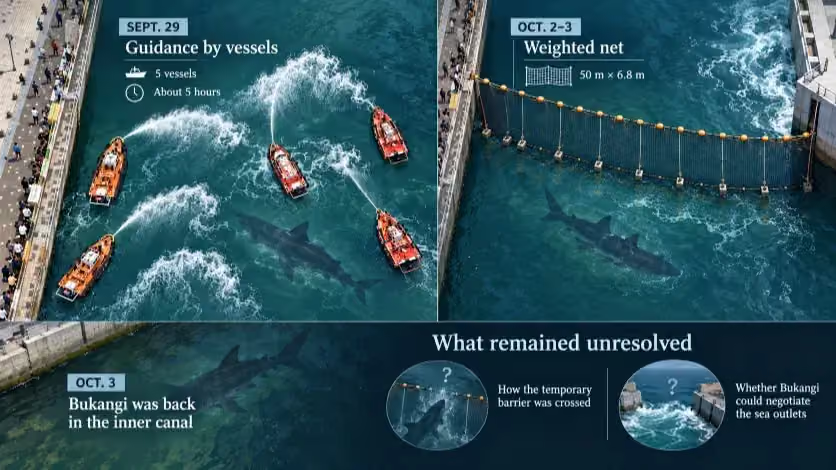
Bukangi, the Shark That Stayed in Busan’s North Port
A rescue net guided Bukangi toward the sea, but the dusky shark returned to B...
More from the author
More from this byline
Stay with the same line of reporting through more work from this byline.
 NewsOct 9, 2026
Why “Busan Is Good” Falls Short as a City Brand
 NewsSep 18, 2026
The Other AI Race Is for the Freedom to Change Course
Reader Signal
Community readWhat did this report leave you with?
Choose the signal that best reflects your reading. Select it again to remove it.
One response per article
No response selected
A moderated conversation about the reporting.
One-level replies and newsroom moderation keep the conversation anchored to this article.
Discussion Status
Open
Please sign in to join the discussion.
Newsletter
Weekly reporting and context from Busan and Korea.