Busan Allocates 16.7 Trillion Won in 2025 Budget
Busan, South Korea - On November 11, the City of Busan announced its 2025 budget, totaling 16.7 trillion KRW, a 6.3% increase from the previous year. With a strategic emphasis on enhancing citizen welfare, supporting economic revitalization, and promoting sustainable urban growth, Busan aims to establish itself as a global hub city that prioritizes both citizen happiness and global competitiveness. Nearly half of the 2025 budget, approximately 8.2 trillion KRW, is dedicated to welfare and socia

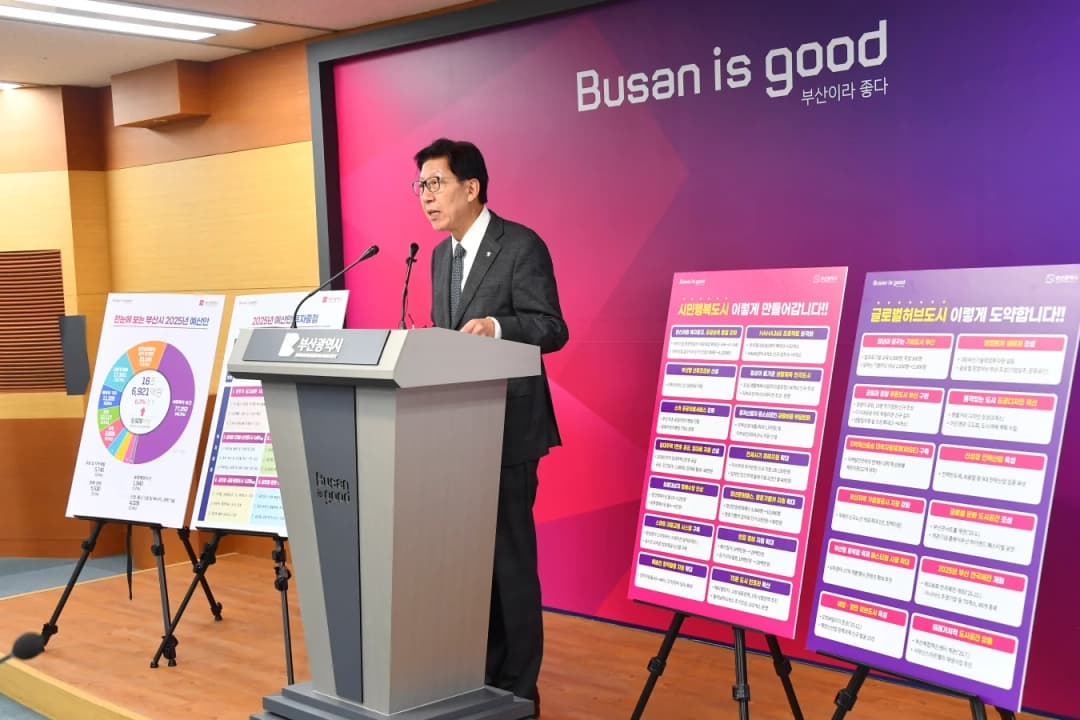
Busan, South Korea - On November 11, the City of Busan announced its 2025 budget, totaling 16.7 trillion KRW, a 6.3% increase from the previous year. With a strategic emphasis on enhancing citizen welfare, supporting economic revitalization, and promoting sustainable urban growth, Busan aims to establish itself as a global hub city that prioritizes both citizen happiness and global competitiveness.
Nearly half of the 2025 budget, approximately 8.2 trillion KRW, is dedicated to welfare and social safety initiatives, underscoring the city’s focus on building a resilient social foundation. Major programs include expanded support for vulnerable populations, increased public healthcare access, and senior services designed to uplift community well-being. In particular, Busan is enhancing its healthcare facilities, with projects such as children’s hospitals, regional medical centers, and expanded nighttime pharmacy operations to reduce health disparities across income levels.
Busan’s extensive welfare focus also emphasizes housing stability for lower-income residents, with increased rental assistance and 13 neighborhood revitalization projects slated to provide essential upgrades to underserved areas. These efforts align with Busan’s broader goal of creating a city where citizens feel safe, supported, and valued in all aspects of daily life.
A key pillar of Busan’s 2025 budget is economic revitalization, with 4.5 trillion KRW designated to boost emerging industries and digital infrastructure. Nearly 1.9 trillion KRW of this amount will go towards supporting small and medium enterprises (SMEs), reinvigorating local markets, and offering specialized job programs. Busan’s commitment to digital transformation includes a focus on AI and quantum technology as core areas for growth, with 1.2 trillion KRW earmarked for these cutting-edge fields. By investing heavily in the digital economy, Busan aspires to cultivate a high-tech industrial base that drives sustained economic growth.
Busan’s approach to economic empowerment also includes building a robust startup ecosystem, which is critical for attracting global investment. In addition to direct funding for digital innovation, the city plans to establish incentives for local and returning investors, thus positioning itself as a top destination for business expansion and technological development in Asia.
With 3.5 trillion KRW allocated for environmental projects, Busan’s budget shows a resolute commitment to sustainability. The city’s “Green and Carbon-Neutral City” initiative includes substantial investment in electric vehicle infrastructure, ecological restoration projects, and expanded recycling facilities. These efforts aim to reduce emissions and support a green economy, ensuring that Busan is prepared to meet international sustainability standards and play an active role in the global climate movement.
Among these environmental initiatives is the restoration of the Macdo Wetlands and the development of eco-friendly spaces throughout the city. By focusing on natural conservation, Busan aims to create urban spaces that are both environmentally friendly and accessible to all citizens, enhancing urban biodiversity while building a healthier living environment.
Busan’s geographic advantage as a port city is reinforced by a 4 trillion KRW investment in logistics and cultural infrastructure. To support its growing role as a logistics center, Busan will accelerate the development of Gadeokdo New Airport and improve connectivity to existing transportation networks, including the construction of new roads to streamline traffic flow into and out of economic free zones.
The North Port redevelopment project will further bolster Busan’s status as a multi-functional logistics and commercial center. These efforts are supplemented by a 945 billion KRW cultural development budget that focuses on creating public spaces and cultural hubs, such as the “15-Minute City” initiative, which aims to give residents access to essential services within walking distance. By fostering a connected, dynamic urban culture, Busan is positioning itself as a city that not only supports global trade but also offers a rich, fulfilling lifestyle for residents and visitors alike.
In comparison to Busan’s 2025 budget, Ulsan has also surpassed a major milestone with its first-ever budget exceeding 5 trillion KRW, reflecting a 7.6% increase from the previous year. Ulsan’s strategic priorities are directed towards welfare services, future industries, and environmental sustainability, mirroring some of Busan’s goals but with a more industrial focus. The city allocated 1.7 trillion KRW to welfare, enhancing support for childcare, after-school programs, and transportation for vulnerable groups. Ulsan is also prioritizing green initiatives, with funds set aside for an International Garden Expo and the construction of a green space management center.
A substantial portion of Ulsan’s budget is dedicated to advancing its industrial base, with 3.6 trillion KRW invested in hydrogen infrastructure, carbon neutrality projects, and emerging energy industries. This aligns with Ulsan’s identity as an industrial hub, aiming to modernize its economy with sustainable energy solutions. Furthermore, safety and disaster preparedness are key areas, with investments in flood prevention, EV charging station safety, and firefighting infrastructure.
Gyeongnam Province’s 2025 budget is set at 12.5 trillion KRW, prioritizing citizen welfare and infrastructure. The province has allocated funds across 126 projects focused on enhancing community welfare, supporting working families, and reinforcing public infrastructure. Gyeongnam’s budget reflects a broader regional commitment to welfare and family support, positioning itself as a province dedicated to comprehensive citizen support and long-term infrastructure development.
While Busan’s 2025 budget focuses on creating a “Global Hub City” with balanced investments across welfare, economic growth, and cultural projects, Ulsan and Gyeongnam’s budgets illustrate their distinct roles. Ulsan is advancing industrial innovation, particularly in sustainable energy, whereas Gyeongnam is concentrating on enhancing public welfare and infrastructure. Together, these regional efforts showcase a collective movement towards resilient, future-ready cities and provinces across South Korea.
Continue this reporting
Reporting on the same issue
Related coverage selected from the article's desk, topics and newsroom relationships.
 NewsOct 16, 2026
What Is Still Worth Going to See?
Busan’s biennale faces questions of artistic judgment and institutional care....
 NewsOct 14, 2026
What Became of Busan’s University Streets?
From 2015 to 2023, registered businesses grew near Pusan National University...
 NewsOct 12, 2026
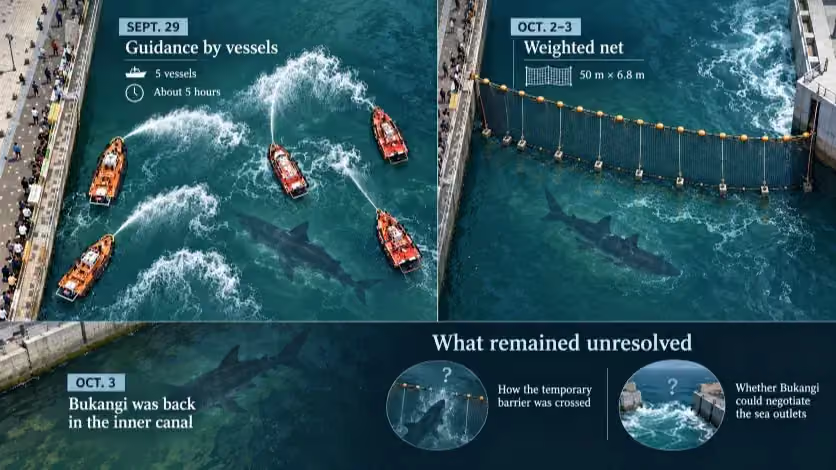
Bukangi, the Shark That Stayed in Busan’s North Port
A rescue net guided Bukangi toward the sea, but the dusky shark returned to B...
More from the author
More from this byline
Stay with the same line of reporting through more work from this byline.
 NewsOct 9, 2026
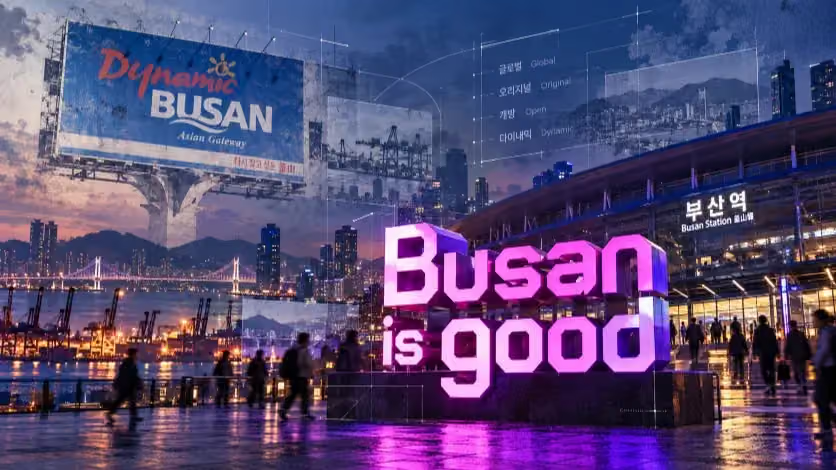
Why “Busan Is Good” Falls Short as a City Brand
 NewsSep 18, 2026
The Other AI Race Is for the Freedom to Change Course
Reader Signal
Community readWhat did this report leave you with?
Choose the signal that best reflects your reading. Select it again to remove it.
One response per article
No response selected
A moderated conversation about the reporting.
One-level replies and newsroom moderation keep the conversation anchored to this article.
Discussion Status
Open
Please sign in to join the discussion.
Newsletter
Weekly reporting and context from Busan and Korea.