Busan Adopts Waterloo Co-Op Model to Bridge Education and Industry
Busan, South Korea - Busan’s Waterloo-style Co-Op Program expanded to include four universities—Tongmyong, Dongseo, Dong-A, and Silla—and aims to train students in nine key strategic industries, such as digital technology, bio-health, and energy. The program allows students to alternate between academic semesters and work placements, gaining real-world experience while still in school. With 95 students participating, the program offers them direct pathways into the workforce by partnering with l

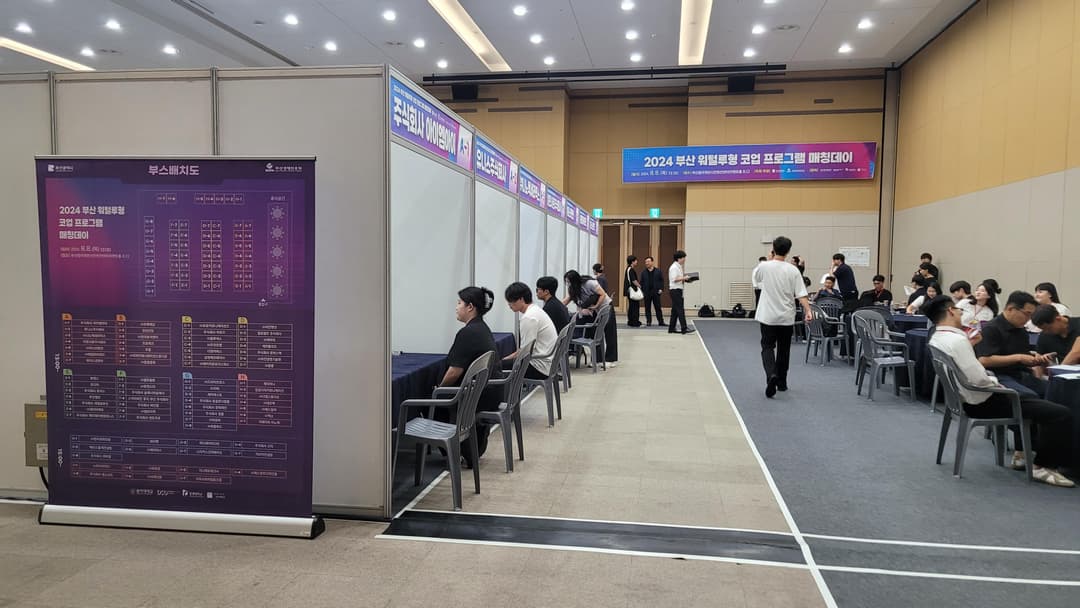
Busan, South Korea - Busan’s Waterloo-style Co-Op Program expanded to include four universities—Tongmyong, Dongseo, Dong-A, and Silla—and aims to train students in nine key strategic industries, such as digital technology, bio-health, and energy. The program allows students to alternate between academic semesters and work placements, gaining real-world experience while still in school. With 95 students participating, the program offers them direct pathways into the workforce by partnering with local businesses that need highly skilled talent. This is crucial for Busan’s economy, which has been keen to retain young talent amid concerns of a “brain drain” to larger cities like Seoul.
The program’s alignment with local industries is key. By focusing on sectors critical to the region's future, such as future mobility and cultural tourism, the Co-Op initiative creates a pipeline of talent for companies that are part of Busan’s broader economic strategy.
The University of Waterloo in Canada is considered the gold standard for co-operative education programs globally. Founded in 1957, its co-op program has grown to include over 25,000 students and partners with 8,000 employers worldwide. Waterloo’s success is largely due to its structured and scalable model, where students alternate between four-month work terms and academic semesters, often completing up to six work terms before graduation.
Key to Waterloo’s success is its long-established network of global employers and its ability to continuously adapt to the evolving needs of industries. The program is deeply embedded in the university’s institutional DNA, with a focus on producing job-ready graduates who are primed for leadership positions. The results speak for themselves: 97% of Waterloo’s co-op students are employed within six months of graduation, and many of these roles are in high-demand sectors like technology and engineering.
Both Busan and Waterloo’s programs emphasize the integration of theoretical education and practical work experience. Students in both systems alternate between classroom learning and industry placements, giving them a more holistic understanding of their chosen fields. This not only enhances employability but also ensures that graduates have the skills local and global industries need.
In Busan’s case, the program targets key sectors that are vital for the city’s growth, such as digital tech, energy, and cultural tourism, while Waterloo has developed a network that spans multiple industries across 60 countries.
One major difference lies in the scale and maturity of the two programs. Waterloo’s co-op model has had over 65 years to refine its processes, build infrastructure, and expand globally. In contrast, Busan’s program, although ambitious, is still in its early stages. While Waterloo boasts partnerships with more than 8,000 employers worldwide, Busan’s program currently focuses on local companies, which may limit its reach in the short term.
Another difference is the global reach. Waterloo’s program allows students to work internationally, giving them exposure to a wide range of industries and cultures. While Busan’s program has the potential to expand globally, its current focus is on creating strong ties between students and local employers to stimulate the regional economy.
Busan’s Co-Op Program has shown promise in its first two years. The increase in participation—from two universities in 2023 to four in 2024—and the engagement of 83 companies suggests that the program is well-received by both students and businesses. The inclusion of foreign students and the simplification of application processes have also made the program more accessible and diverse, helping to meet the growing demands of Busan’s industries.
However, the program is not without its challenges. Unlike Waterloo, which has a well-established infrastructure and funding model, Busan is still in the process of building the institutional support required for long-term sustainability. Ensuring continued financial backing and expanding its network of employers beyond the local market will be crucial as the program matures. Additionally, while Waterloo has been able to adapt to global workforce trends, Busan’s program may need to develop similar flexibility as industries evolve.
Busan’s Waterloo-style Co-Op Program holds potential for long-term growth. As the city looks to expand the program in the coming years, increasing student participation and fostering deeper relationships with local and global employers will be key. Busan could learn from Waterloo’s experience by building a robust global network and creating a more adaptable framework that can respond to changes in both the domestic and international job markets.
Ultimately, Busan’s initiative is a step in the right direction. By aligning education with industry and creating a pipeline of skilled professionals, the city is laying the groundwork for a more resilient, future-proof economy. If the program continues to expand and evolve, Busan could become a model for other cities seeking to retain local talent and promote sustainable economic development through education.
Continue this reporting
Reporting on the same issue
Related coverage selected from the article's desk, topics and newsroom relationships.
 NewsOct 16, 2026
What Is Still Worth Going to See?
Busan’s biennale faces questions of artistic judgment and institutional care....
 NewsOct 14, 2026
What Became of Busan’s University Streets?
From 2015 to 2023, registered businesses grew near Pusan National University...
 NewsOct 12, 2026
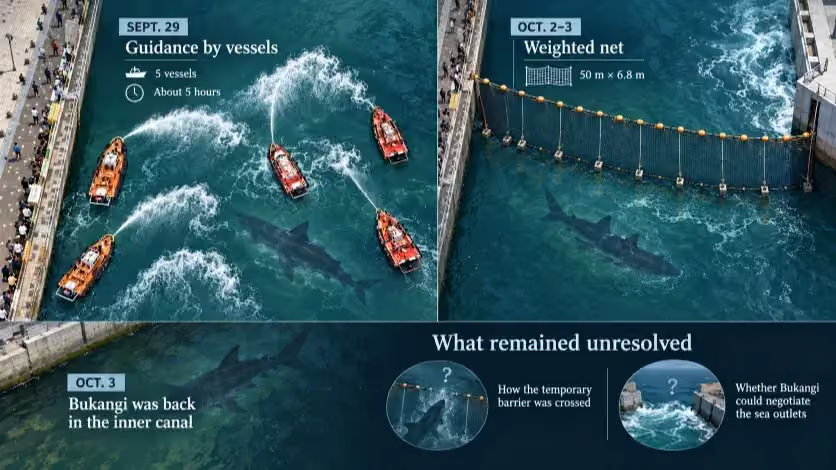
Bukangi, the Shark That Stayed in Busan’s North Port
A rescue net guided Bukangi toward the sea, but the dusky shark returned to B...
More from the author
More from this byline
Stay with the same line of reporting through more work from this byline.
 NewsOct 9, 2026
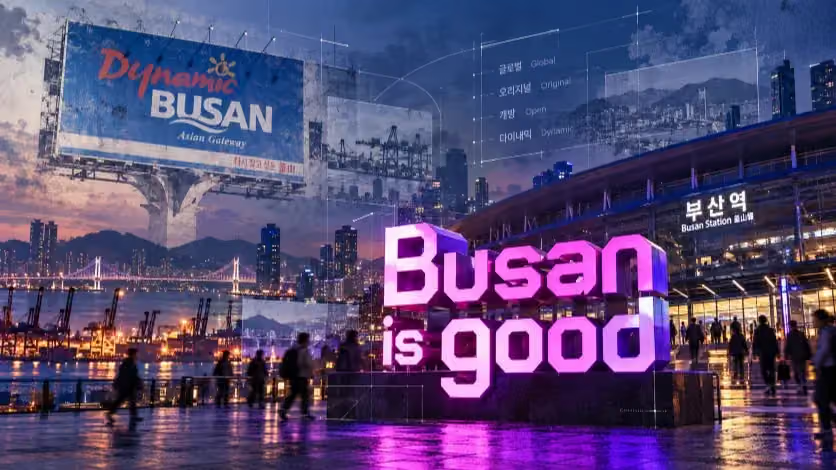
Why “Busan Is Good” Falls Short as a City Brand
 NewsSep 18, 2026
The Other AI Race Is for the Freedom to Change Course
Reader Signal
Community readWhat did this report leave you with?
Choose the signal that best reflects your reading. Select it again to remove it.
One response per article
No response selected
A moderated conversation about the reporting.
One-level replies and newsroom moderation keep the conversation anchored to this article.
Discussion Status
Open
Please sign in to join the discussion.
Newsletter
Weekly reporting and context from Busan and Korea.