Busan, Ulsan, and Gyeongnam's Unified Push for Early Construction of Metropolitan Railways
Busan, South Korea – In a strategic move to enhance regional connectivity and stimulate economic growth, the cities of Busan, Ulsan, and Gyeongnam Province have jointly submitted a proposal for the expedited construction of two major metropolitan railways. This collaborative effort aims to address regional imbalances and significantly improve transportation infrastructure. The joint proposal focuses on the early establishment of the Busan-Yangsan-Ulsan Metropolitan Railway and the Southeast Cir

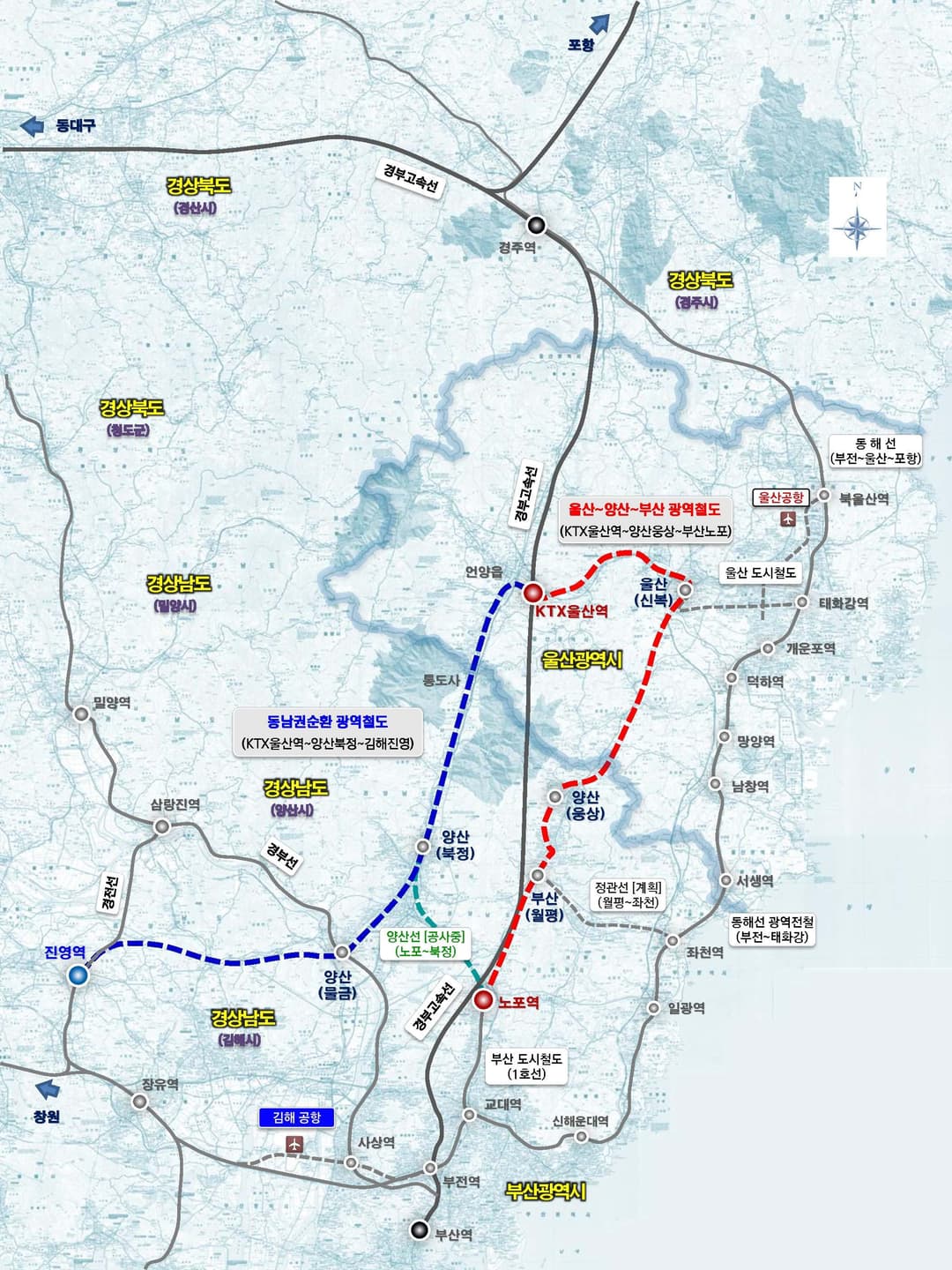
Busan, South Korea – In a strategic move to enhance regional connectivity and stimulate economic growth, the cities of Busan, Ulsan, and Gyeongnam Province have jointly submitted a proposal for the expedited construction of two major metropolitan railways. This collaborative effort aims to address regional imbalances and significantly improve transportation infrastructure.
The joint proposal focuses on the early establishment of the Busan-Yangsan-Ulsan Metropolitan Railway and the Southeast Circular Metropolitan Railway. These projects are expected to create a cohesive urban network, promoting seamless travel and economic integration across the three regions.
The Busan-Yangsan-Ulsan line will connect Busan's Nopo station to Ulsan's KTX station via Yangsan, covering a total distance of 48.8 kilometers. This railway will significantly reduce travel times, enabling a commute from Busan to Ulsan in under an hour. The proposed route will also link currently disjointed urban rail lines, enhancing the overall efficiency and accessibility of public transportation in the region.
Meanwhile, the Southeast Circular Metropolitan Railway will span 51.4 kilometers, connecting Ulsan, Yangsan, and Gimhae. This line is integral to the vision of creating a "one-hour living sphere," facilitating rapid transit within the southeastern region of South Korea.
This initiative is part of a broader strategy to counteract population decline and stimulate regional development. Despite being the second-largest metropolitan area in South Korea, the Busan-Ulsan-Gyeongnam (Bu-Ul-Gyeong) region has faced significant population losses and economic challenges in recent years. The enhanced rail connectivity is expected to serve as a catalyst for economic revitalization, improving access to employment, education, and other essential services.
Busan Mayor Park Hyung-joon emphasized the transformative potential of these projects, stating, "The new railways will not only unify the Bu-Ul-Gyeong region but also act as a crucial stepping stone toward the successful launch of the Gadeokdo New Airport in 2029. This integrated transport network is essential for achieving balanced regional development and sustainable growth."
The joint proposal has been submitted to key government bodies, including the Ministry of Economy and Finance and the Ministry of Land, Infrastructure, and Transport. The leaders of Busan, Ulsan, and Gyeongnam are seeking swift approval and cooperation from the central government to expedite the necessary pre-construction assessments and commence the projects without delay.
Continue this reporting
Reporting on the same issue
Related coverage selected from the article's desk, topics and newsroom relationships.
 NewsOct 16, 2026
What Is Still Worth Going to See?
Busan’s biennale faces questions of artistic judgment and institutional care....
 NewsOct 14, 2026
What Became of Busan’s University Streets?
From 2015 to 2023, registered businesses grew near Pusan National University...
 NewsOct 12, 2026
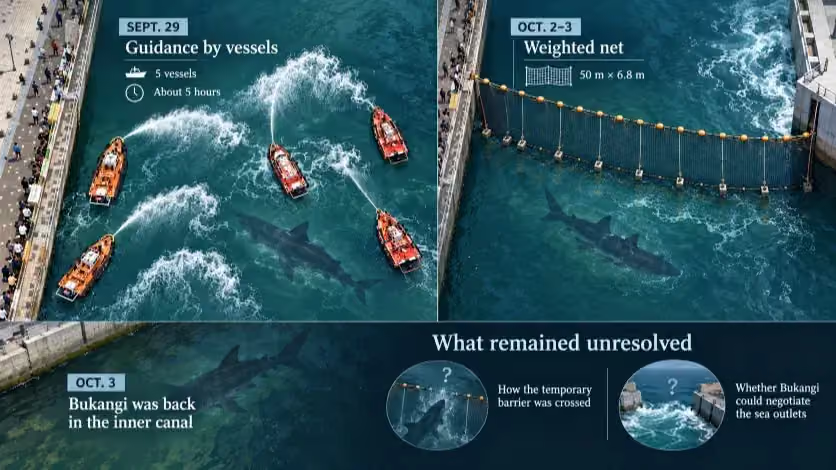
Bukangi, the Shark That Stayed in Busan’s North Port
A rescue net guided Bukangi toward the sea, but the dusky shark returned to B...
More from the author
More from this byline
Stay with the same line of reporting through more work from this byline.
 NewsOct 9, 2026
Why “Busan Is Good” Falls Short as a City Brand
 NewsSep 18, 2026
The Other AI Race Is for the Freedom to Change Course
Reader Signal
Community readWhat did this report leave you with?
Choose the signal that best reflects your reading. Select it again to remove it.
One response per article
No response selected
A moderated conversation about the reporting.
One-level replies and newsroom moderation keep the conversation anchored to this article.
Discussion Status
Open
Please sign in to join the discussion.
Newsletter
Weekly reporting and context from Busan and Korea.