Bu-Ul-Gyeong Megacity Faces Delays While Daegu-Gyeongbuk Gains Ground
Busan, South Korea - As South Korea seeks to decentralize economic growth from the Seoul metropolitan area, two major regional development projects stand out: the Bu-Ul-Gyeong Megacity and the Daegu-Gyeongbuk Administrative Integration. From Busan’s vantage point, the Bu-Ul-Gyeong project, which involves Busan, Ulsan, and Gyeongnam, is facing serious delays. In contrast, Daegu-Gyeongbuk’s integration is progressing rapidly, raising concerns in Busan about its own region’s ability to stay competi

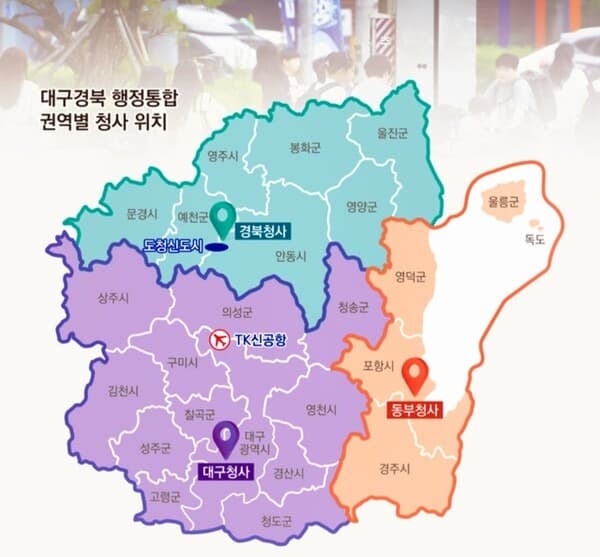
Busan, South Korea - As South Korea seeks to decentralize economic growth from the Seoul metropolitan area, two major regional development projects stand out: the Bu-Ul-Gyeong Megacity and the Daegu-Gyeongbuk Administrative Integration. From Busan’s vantage point, the Bu-Ul-Gyeong project, which involves Busan, Ulsan, and Gyeongnam, is facing serious delays. In contrast, Daegu-Gyeongbuk’s integration is progressing rapidly, raising concerns in Busan about its own region’s ability to stay competitive.
The Bu-Ul-Gyeong Megacity project, envisioned as a strategic collaboration between Busan, Ulsan, and Gyeongnam, aimed to create a unified economic zone centered on industrial collaboration, smart city innovations, and advanced logistics. However, as of 2024, the project has struggled to move beyond the planning phase, stalled by political disagreements and governance issues.
One of the significant barriers has been resolving how administrative power should be distributed among the cities, with Busan, as the largest, being seen as potentially dominating the partnership. These issues have delayed the establishment of a special local government to oversee the project, creating friction among the participating regions.
Public awareness and support have also lagged. Surveys from 2023 indicate that 69.4% of residents in the region are unaware of the megacity initiative. This lack of public engagement is a major factor behind the political delays, as local governments struggle to build the necessary momentum to push forward
Meanwhile, the Daegu-Gyeongbuk administrative integration continues to advance, with its goal of unifying Daegu and Gyeongbuk under one governance structure by 2026. Unlike the Bu-Ul-Gyeong project, which has stalled, Daegu-Gyeongbuk’s integration is supported by tangible infrastructure projects, such as the construction of a new international airport and a circular rail network.
The new Daegu-Gyeongbuk International Airport, expected to become operational by 2030, will serve as a major logistics hub, enhancing the region’s global connectivity. The anticipated economic benefits of the airport are substantial, with projections of over ₩39 trillion in economic activity and more than 300,000 jobs created. This makes Daegu-Gyeongbuk a rising competitor to Busan in terms of logistics and transport, areas traditionally dominated by Busan’s port infrastructure.
While administrative integration projects like Daegu-Gyeongbuk’s promise benefits, research on regional development indicates that success is not guaranteed by administrative changes alone. Studies have shown that for such projects to be effective, they must be supported by strong governance frameworks, industrial diversity, and public buy-in. Simply merging administrative boundaries, as in the case of Bu-Ul-Gyeong, does not automatically translate into economic growth or improved regional cooperation.
Moreover, research highlights the importance of addressing existing economic disparities within a region before integration. In the case of Daegu-Gyeongbuk, the success of the project may depend on how well the region can balance development across urban and rural areas, and whether it can effectively integrate its industrial sectors with the new infrastructure.
"Path dependence" is another crucial factor in regional integration projects. In regions with long-standing economic disparities, the challenges of integration are compounded by historical and institutional barriers. For Bu-Ul-Gyeong, the lack of immediate progress may be attributed to these deeper structural issues, making it more difficult to unify governance and economic policies without first addressing the economic diversity of the involved cities
Busan’s regional competitiveness is now at stake as Daegu-Gyeongbuk pushes ahead with infrastructure and economic integration. With the completion of the new airport and rail network, Daegu-Gyeongbuk will be well-positioned to attract investment, potentially drawing businesses and jobs away from Busan’s traditional strongholds in logistics and manufacturing. The risk for Busan is clear—if the Bu-Ul-Gyeong Megacity project continues to stall, the region could fall behind in the race to dominate southern South Korea’s economy.
In addition to these concerns, research on regional integration suggests that Busan’s reliance on its port infrastructure may no longer be enough to sustain its regional dominance. Diversification into high-tech industries and smart city innovations will be essential for Busan to keep pace with Daegu-Gyeongbuk’s advancements.
For Bu-Ul-Gyeong to regain momentum, political leaders must first resolve the governance gridlock and establish a special local government capable of overseeing joint economic projects. Public engagement is also critical, as low awareness and lack of support from local residents could continue to slow progress. Without broader public backing, Bu-Ul-Gyeong risks falling further behind as Daegu-Gyeongbuk solidifies its regional position.
Busan must also consider diversifying its economic strategy beyond its traditional industries. By investing in new technologies, smart city infrastructure, and innovation, Busan can remain competitive and potentially leverage its strengths in logistics while expanding into other sectors.
As of 2024, Busan faces significant challenges. While Daegu-Gyeongbuk continues to make headway with its administrative integration and infrastructure projects, the Bu-Ul-Gyeong Megacity remains mired in political delays and governance issues. From Busan’s perspective, the risks are clear—without decisive action, the city may lose its competitive edge as a regional leader.
Busan’s future depends on its ability to resolve political differences with Ulsan and Gyeongnam, engage the public, and push forward with the Bu-Ul-Gyeong project. Only then can it hope to catch up with Daegu-Gyeongbuk, which has already positioned itself as a strong competitor in the race for regional economic dominance.
Continue this reporting
Reporting on the same issue
Related coverage selected from the article's desk, topics and newsroom relationships.
 NewsOct 16, 2026
What Is Still Worth Going to See?
Busan’s biennale faces questions of artistic judgment and institutional care....
 NewsOct 14, 2026
What Became of Busan’s University Streets?
From 2015 to 2023, registered businesses grew near Pusan National University...
 NewsOct 12, 2026
Bukangi, the Shark That Stayed in Busan’s North Port
A rescue net guided Bukangi toward the sea, but the dusky shark returned to B...
More from the author
More from this byline
Stay with the same line of reporting through more work from this byline.
 NewsOct 9, 2026
Why “Busan Is Good” Falls Short as a City Brand
 NewsSep 18, 2026
The Other AI Race Is for the Freedom to Change Course
Reader Signal
Community readWhat did this report leave you with?
Choose the signal that best reflects your reading. Select it again to remove it.
One response per article
No response selected
A moderated conversation about the reporting.
One-level replies and newsroom moderation keep the conversation anchored to this article.
Discussion Status
Open
Please sign in to join the discussion.
Newsletter
Weekly reporting and context from Busan and Korea.