2024 Busan Geological Congress – Shaping Earth’s Future
Busan, South Korea – The 37th International Geological Congress (IGC 2024) has officially commenced in Busan, South Korea. Running from August 25 to 31 at BEXCO, this congress marks the first time South Korea has hosted this prestigious event, which is often referred to as the "Geological Olympics." It is the first time the congress has been held in East Asia in 28 years, drawing over 7,000 participants from 121 countries, making it the largest gathering in the history of the congress. One of t


Busan, South Korea – The 37th International Geological Congress (IGC 2024) has officially commenced in Busan, South Korea. Running from August 25 to 31 at BEXCO, this congress marks the first time South Korea has hosted this prestigious event, which is often referred to as the "Geological Olympics." It is the first time the congress has been held in East Asia in 28 years, drawing over 7,000 participants from 121 countries, making it the largest gathering in the history of the congress.
One of the most anticipated topics at IGC 2024 is the formal recognition of the "Anthropocene" epoch. This term, first proposed by Nobel laureate Paul Crutzen, suggests that we have entered a new geological era characterized by the significant impact of human activities on Earth's geology and ecosystems. The formalization of the Anthropocene would mark a significant departure from the Holocene, the current epoch, which began approximately 11,700 years ago and has been characterized by a relatively stable climate.
The proposal for recognizing the Anthropocene was recently rejected by the Subcommission on Quaternary Stratigraphy (SQS), which deemed the suggested timeline too narrow. Despite this, the debate is far from settled, and IGC 2024 serves as a critical platform for continuing discussions. The outcome of these discussions could significantly influence the future of geological classification and our understanding of human impact on the planet.
IGC 2024 is also addressing pressing global challenges, including climate change and environmental sustainability. Sessions will cover topics such as carbon neutrality, strategic mineral resources, and the safe management of nuclear waste—key areas in the global effort to mitigate climate change and ensure sustainable resource management.
Additionally, the congress will feature discussions on space planetary geology, reflecting the growing interest in understanding other celestial bodies as part of geological studies. This broadens the scope of the congress, incorporating both terrestrial and extraterrestrial perspectives.
A key highlight of the congress will be the adoption of the "Busan Declaration" during the closing ceremony on August 30. This declaration will symbolize the global scientific community’s commitment to collaborate on addressing future environmental challenges, particularly those related to climate change and sustainable development. The declaration is expected to establish Busan as a global hub for earth science research and innovation, solidifying its position in the international scientific community.
IGC 2024 is not just an academic event; it engages the public through activities like the GeoFilm Festival and geological excursions, promoting both scientific knowledge and cultural exchange. The GeoFilm Festival, held at the Busan Cinema Center from August 26 to 30, will feature a series of geology-themed films, accessible to the public through on-site registration. This initiative is designed to foster a broader interest in geological sciences among the general public by making scientific concepts more relatable and engaging through the medium of film.
For more information on the congress and its schedule, visit the official website at igc2024korea.org.
Continue this reporting
Reporting on the same issue
Related coverage selected from the article's desk, topics and newsroom relationships.
 NewsOct 16, 2026
What Is Still Worth Going to See?
Busan’s biennale faces questions of artistic judgment and institutional care....
 NewsOct 14, 2026
What Became of Busan’s University Streets?
From 2015 to 2023, registered businesses grew near Pusan National University...
 NewsOct 12, 2026
Bukangi, the Shark That Stayed in Busan’s North Port
A rescue net guided Bukangi toward the sea, but the dusky shark returned to B...
More from the author
More from this byline
Stay with the same line of reporting through more work from this byline.
 NewsOct 9, 2026
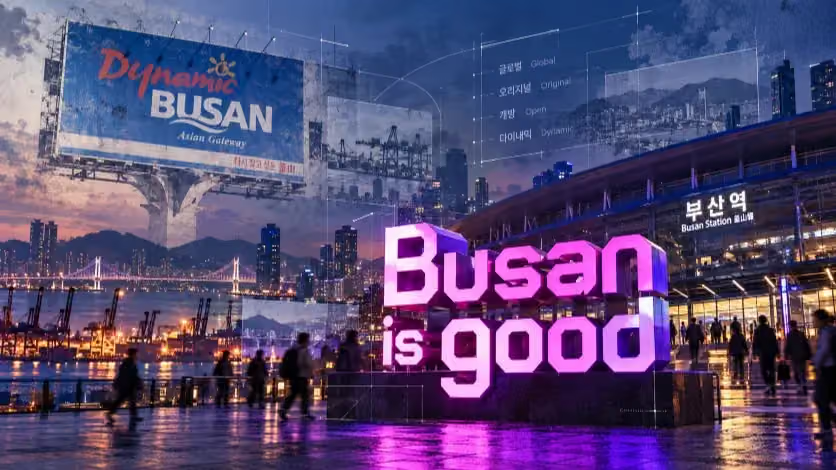
Why “Busan Is Good” Falls Short as a City Brand
 NewsSep 18, 2026
The Other AI Race Is for the Freedom to Change Course
Reader Signal
Community readWhat did this report leave you with?
Choose the signal that best reflects your reading. Select it again to remove it.
One response per article
No response selected
A moderated conversation about the reporting.
One-level replies and newsroom moderation keep the conversation anchored to this article.
Discussion Status
Open
Please sign in to join the discussion.
Newsletter
Weekly reporting and context from Busan and Korea.