AI in Schools, Apathy at Polls: Busan's Education at a Crossroads
Busan’s education system faces AI disruption, inequality, and public apathy. Can a new superintendent reshape the future of learning?
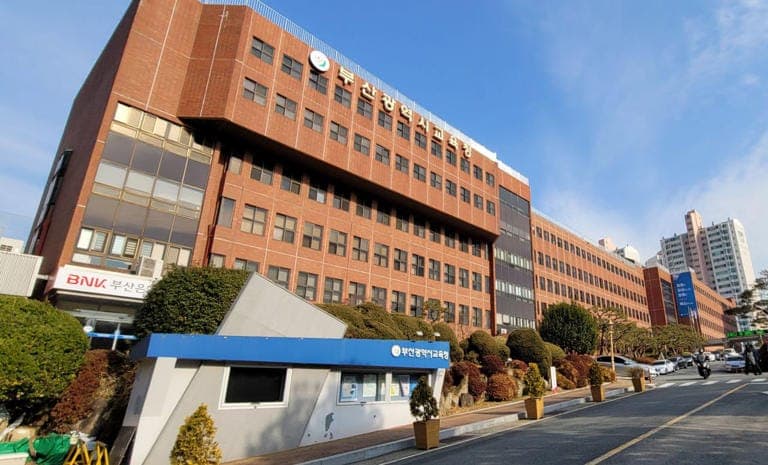
BUSAN, South Korea – On April 2, voters in Busan will cast ballots in a by-election that, despite its low national profile, could shape the future of education in South Korea’s second-largest city. The race for superintendent of the Busan Metropolitan Office of Education—an institution overseeing more than 700 schools and managing an annual budget of over 5 trillion won—is not just about administrative leadership. It is a referendum on civic engagement, education reform, and the role of public institutions in a time of growing societal complexity.
Historically, superintendent elections in Busan have struggled with voter apathy. In 2007, turnout languished at just 15.3 percent. Despite the office’s sweeping authority over school curricula, personnel policy, and student welfare, awareness remains low—and participation, even lower. This year’s by-election arrives amid widespread public disengagement, yet it comes at a time when the city’s education system faces deep, structural challenges.
Systemic Strain Beneath the Surface
Busan’s education landscape is burdened by problems that go far beyond test scores. A rapidly declining birth rate has led to the closure and consolidation of schools, particularly in older, inner-city districts. These closures not only displace students and teachers but also erode the communities that once centered around schools as civic and social hubs.
Educational inequality remains stark. Affluent districts often benefit from newer facilities and greater parental involvement, while under-resourced neighborhoods face deteriorating infrastructure and underperforming academic outcomes. Critics also point to a cultural inertia: an enduring overreliance on rote memorization, standardized testing, and hierarchical classroom dynamics—leaving little space for creativity, emotional well-being, or democratic participation.
Meanwhile, teachers are increasingly burdened by administrative overload and feel alienated from policymaking processes. Students report rising levels of anxiety, burnout, and isolation. For all of Korea’s innovation and digital progress, its school system, many argue, remains trapped in a model that prioritizes conformity and individual competition over collaboration and holistic growth.
Three Candidates, Three Visions
The current by-election features three candidates, each with distinct credentials and philosophies.
Kim Seok-jun, who served as Busan’s superintendent from 2014 to 2022, is seeking a return to office with a progressive platform centered on equity, student-centered learning, and stronger civic education. Known for prioritizing teacher autonomy and reducing reliance on private education, Kim frames himself as an experienced reformer.
Jeong Seung-yoon, a law professor at Pusan National University and former prosecutor, represents a more conservative perspective. His campaign emphasizes discipline, rule of law, and a return to “educational fundamentals.” Supporters praise his tough stance on classroom disorder, but critics argue that his approach lacks systemic awareness and a modern educational vision.
Choi Yoon-hong, who briefly served as acting superintendent after Kim’s departure, positions himself as a moderate technocrat. With a background in educational administration, he promises continuity and bureaucratic efficiency, though he has yet to articulate a bold agenda for reform.
Beyond policy differences, the candidates reflect deeper tensions within Korea’s education debate: Should schools prioritize excellence or equity? Should reforms emphasize innovation or tradition? Should governance remain top-down, or move toward participatory models?
AI and the Philosophy Gap
As Korea accelerates the rollout of AI-powered textbooks and digital learning tools, critics warn that the nation’s technology-first approach is unfolding in a vacuum—absent a coherent educational philosophy.
Busan, like other cities, is testing AI-based systems to deliver personalized instruction and performance analytics. While proponents highlight efficiency and individualized learning, educators worry that these tools risk deepening the culture of test-centric achievement—unless guided by a more humanistic framework.
“Innovation without purpose can be dangerous,” one teacher’s union official noted. “We’re adopting AI at breakneck speed, but we haven’t asked the basic question: What kind of people are we trying to raise?”
In neighborhoods already grappling with inequality and depopulation, the introduction of AI is less about democratization and more about automating decline—replacing human connection with digital substitution. Despite these concerns, none of the current candidates has clearly articulated an educational philosophy that frames technology within ethical or civic values.
Education Beyond the Classroom
The absence of vision is particularly alarming given the long-term nature of educational outcomes. Unlike university acceptance rates or test scores, the true effects of K-12 education emerge over time—often years later—in how students grow into adults, participate in democracy, and contribute to society.
If schools are to nurture not just high-achievers but engaged, ethical citizens, their leadership must embrace a broader mission. As one education researcher put it: “A failing school system does not collapse overnight. It erodes from within—quietly—as its graduates lose faith in one another, in their institutions, and in the future.”
Apathy at the Polls, Urgency in the Classroom
Despite the stakes, public interest remains subdued. The Busan Election Commission has encouraged employers to grant workers voting leave, as required by law. Early voting runs March 28–29, ahead of the April 2 election. Still, limited media coverage and a pervasive sense of futility continue to suppress turnout.
The problem, experts say, is cultural. “South Koreans talk about education constantly,” said one researcher, “but when it comes time to choose who leads it, most people stay home.” The paradox is painful: schools are widely seen as engines of national growth, yet decisions about their leadership unfold with minimal public engagement.
The Future at a Crossroads
Busan’s superintendent election is more than a personnel change—it’s a moment of reckoning. Can the city move beyond managerial tweaks toward a renewed philosophy of public education? Can its schools become places that prepare students not just for economic competition, but for democratic life?
The rise of AI, the decline in population, and the persistence of inequality demand more than policy reforms. They require a bold rethinking of what education is for—and who it should serve.
This by-election may be quiet, but the questions it raises echo loudly. For Busan—and for Korea—it is a chance not just to elect a leader, but to imagine a new future for learning, one rooted not in automation or tradition alone, but in purpose, participation, and public trust.
Continue this reporting
Reporting on the same issue
Related coverage selected from the article's desk, topics and newsroom relationships.
 NewsSep 8, 2026
Busan Port’s Bigger Balance Sheet May Come With Less Control
Busan enters South Korea’s port-authority merger with the largest assets, the...
 NewsSep 7, 2026
How 38,000 Future Residents Entered Busan’s Growth Plan
Busan’s 2040 master plan counts 38,000 Eco Delta City residents toward develo...
 NewsSep 3, 2026
Busan’s Quantum-Sensing Cluster Begins With Battery Inspection
Busan’s battery-sensing project shows what South Korea’s new quantum cluster...
More from the author
More from this byline
Stay with the same line of reporting through more work from this byline.
 NewsSep 5, 2026
How a Political Appointment Becomes a Judgment of Character
 NewsAug 27, 2026
South Korea Has Outgrown Washington’s Nuclear Rules
Editorial Record
Corrections, sourcing notes and newsroom disclosures remain part of the published record. View Newsroom Notes →
Reader Signal
Community readWhat did this report leave you with?
Choose the signal that best reflects your reading. Select it again to remove it.
One response per article
No response selected
A moderated conversation about the reporting.
One-level replies and newsroom moderation keep the conversation anchored to this article.
Discussion Status
Open
Please sign in to join the discussion.
Newsletter
Weekly reporting and context from Busan and Korea.